
Molting
Hello everyone, how are you doing? This is Tanaka from GRIDFRAME. Since my last update, I have been applying what I wrote about then to production work across various projects.
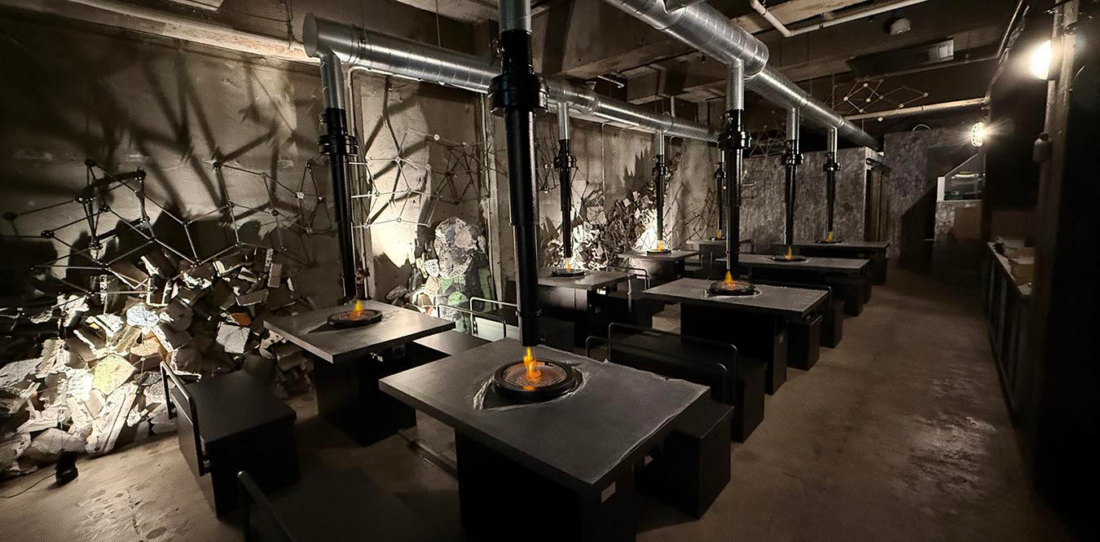
Horumon EITA.Details are scheduled to be published in the next issue.
As I have written previously, our goal is not to create a fixed, finished product. Instead, we aim to loosen the invisible boundaries surrounding the people who engage with the space, creating a place that restores a sense of vitality sparked by inquiry. We recently gave the GRIDFRAME website a major update, so I would be delighted if you took a look.
https://gridframe.co.jp/
<Molting>
In June 2026, I built the second “Real Clothes” hair salon in Shimokitazawa (near Ikenoue Station), Setagaya Ward. This project involved relocating the original salon, which I had built eighteen years earlier in 2008.
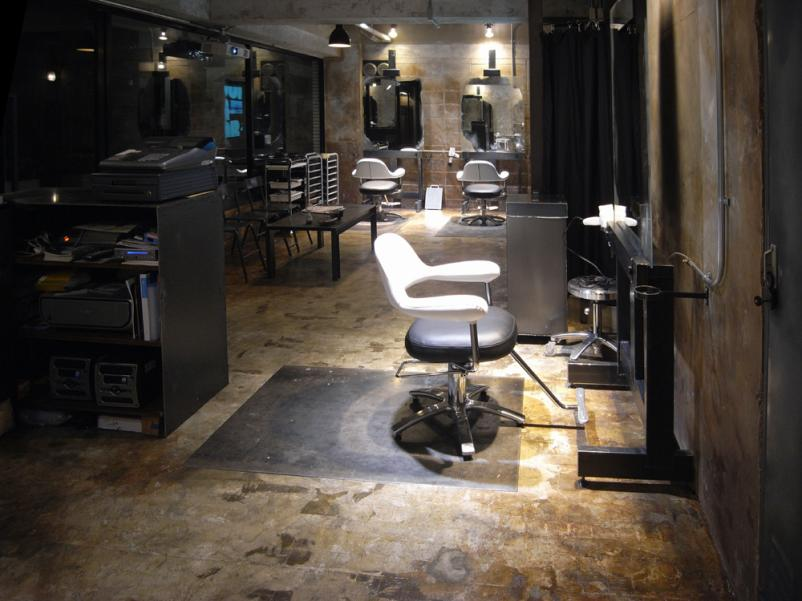
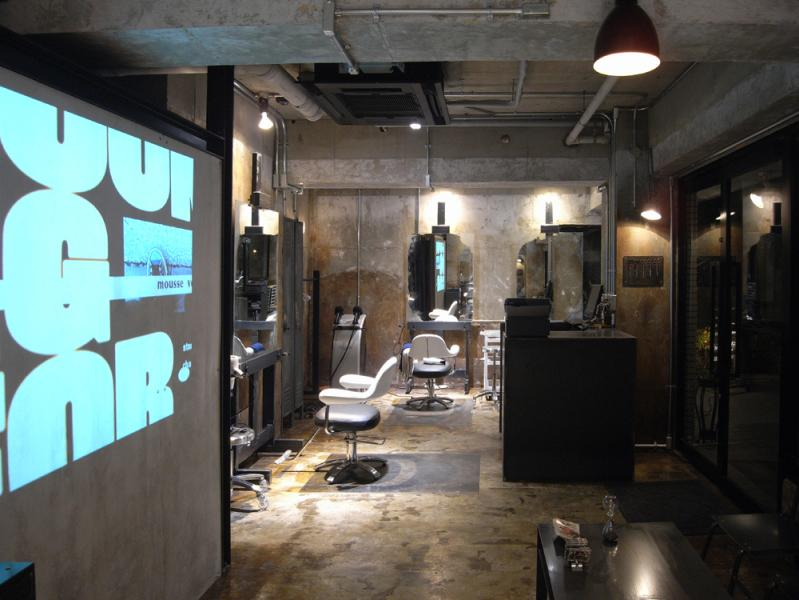
【As a place where creators can be creative】 RealClothes2008
Like Rikyu’s tea room, where one sits face-to-face with the guest.↑
It is said that Mr. Yotsumoto, a hairstylist, has experienced “molting” several times. Yes, the very same phenomenon where a snake sheds its old skin. It means that, within the span of a single life, he has undergone experiences akin to being reborn as a different person—not just once, but multiple times.
・・・・・・・・・・
It was 2008. We had been in touch via email and arranged to meet at Shimokitazawa Station; I vividly remember the moment we first met—how he shook my hand firmly with both hands and said, “I look forward to working with you.”
“I never intended to come to Tokyo.”
…He said this much later, as he looked back on those days.
Mr. Yotsumoto was someone who had successfully opened and run a hair salon in Kyoto. Had he simply continued on that path, he would have faced no financial worries—so why did he choose to relocate to Tokyo?
He shared the story of the path he had taken.
・・・・・・・・・・・・・・・・・・・・
I opened a hair salon in Kyoto when I was 28, and thanks to everyone’s support, it became a thriving business.
I invested a lot of money in it, and people around me would comment on how beautiful the shop was.
But as time went on, I began to realize that I wasn’t actually enjoying my days.
There is really only one path to becoming a hairdresser: you look at hair catalogs and practice endlessly until you can recreate the styles exactly as shown. You master multiple styles. You learn to cut faster. That is how you boost your sales.
That is the ideal image of a hairdresser—and it’s the same all over Japan.
You cut a client’s hair in 15 minutes; even if you want to do a little more, you can’t, because the next person is waiting. It’s just the same routine, repeated day after day.
The money piles up, but the work itself isn’t fun at all. That’s probably why most people just save up enough money and retire once they reach a certain age.
As I kept working, I felt a vague sense of unease—a nagging dissatisfaction—gradually building up inside me. Yet, I couldn’t find anything anywhere in Japan that could resolve that feeling.
・・・・・・・・・・
When I told my mentor about it, they suggested I go to Paris—specifically, to train in haircutting there.
I went because of that recommendation, but to be honest, I didn’t think it would clear away the lingering sense of unease I felt.
I had a glamorous image of Paris and expected the training to take place in a stylish setting, but… I couldn’t have been more wrong.
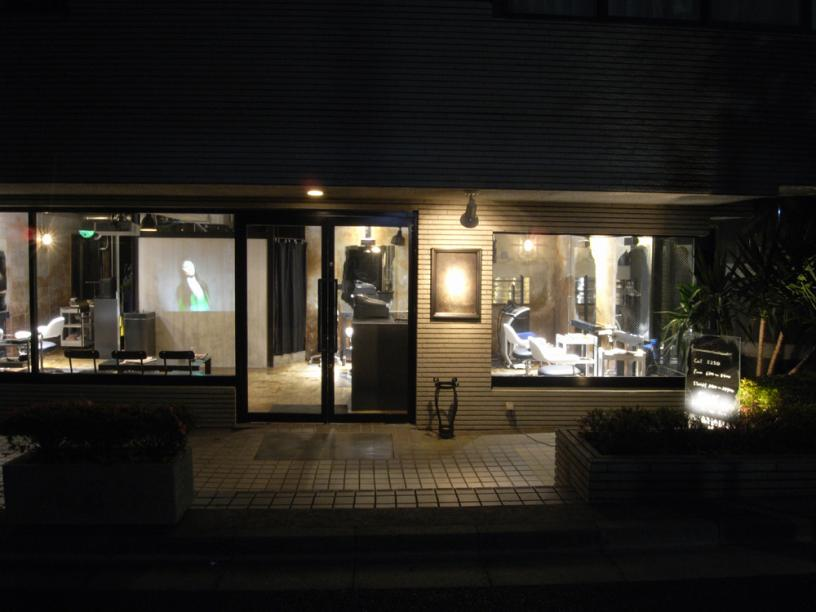
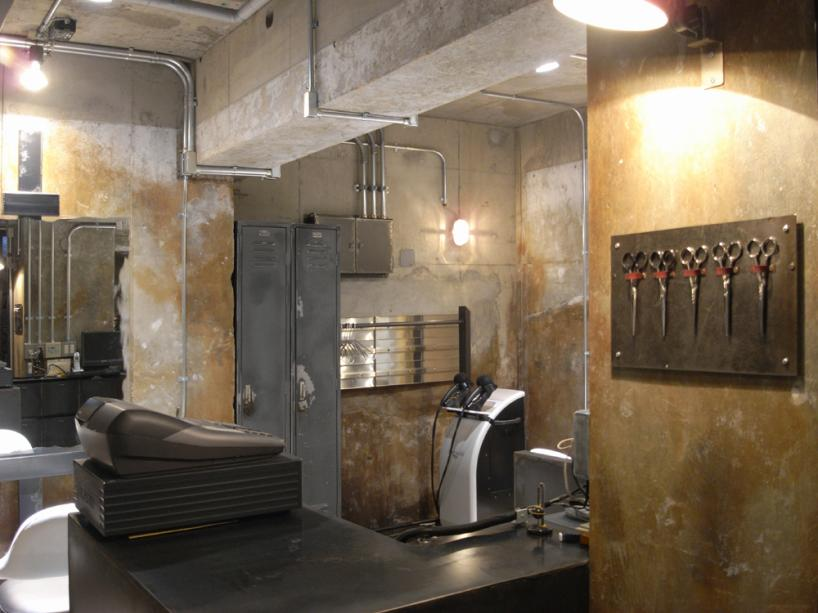
【As a place where creators can be creative】 RealClothes2008 At the salon entrance, there is a stand for shears—not swords.↑
The training took place in an area of Paris—on the outskirts—where the ground was littered with dog droppings. The venue was like a warehouse, featuring shelves that looked like DIY projects cobbled together from hardware store materials, construction lights so hot they’d scorch your back while you cut hair, and a toilet missing its seat… I found myself thinking, “What on earth is this?”
Yet, in that very space, incredibly high-quality hairstyles were being created one after another. The technique used was *effilage*—a method originating in France that involves truly engaging with the hair, understanding its unique properties, and sculpting it freely into three-dimensional shapes.
It wasn’t about churning out a specific style within a set timeframe; it was a form of haircutting focused entirely on creating something excellent. There was no room for complacency—it was an environment where you were constantly challenging yourself.
Through that training, the fog of uncertainty in my mind lifted all at once. I realized then that I could truly make a living in this world.
・・・・・・・・・・
After returning to Japan, I dismantled the shop I had spent so much money on and tried running the business with nothing but an easel holding a mirror.
I felt that a space filled with beautiful items selected from a catalog was fundamentally different from the leaky, construction-site-like environment I had experienced in Paris.
…As it turned out, sales didn’t change at all. Yet, customers kept coming just the same.
It made me start thinking about what a “space” really is.
・・・・・・・・・・
We hairstylists don’t simply produce predetermined items; perhaps we are closer to painters or potters.
If so, shouldn’t a hair salon be a space not only for welcoming clients but also for the creator to engage in creative work?
Imagine working in a space that evokes the same feeling as a piece of incredibly high-quality graffiti found in a New York back alley—wouldn’t that inspire the creator to give their absolute all, without cutting a single corner?
That is why my hope is for a space that—while leaving the creative decisions entirely up to the maker—is itself a handcrafted environment born from that same spirit of pouring one’s full ability into the work without compromise.
・・・・・・・・・・
When I decided to pursue a career as a creator of forms, I knew I could master the necessary techniques in the Kansai region, but I wanted to constantly refine my aesthetic sense, so I began attending hair and makeup workshops in Tokyo.
While wandering around Tokyo each week, I stumbled upon a particular property. I thought, “What a great spot to have available,” and—partly out of curiosity—I kept coming back to check on it, noting each time that it was still vacant. I had no intention of leaving Kyoto, so my interest was purely casual.
One day, curious as to why the place remained empty, I decided to call the number displayed on the sign. I was surprised when the real estate agent told me, “It’s because the location is bad.” I blurted out, “If me,I’d rent it,” prompting them to ask, “At what price?” I replied, “Oh, I was just joking. I’m based in Kyoto, so I certainly wouldn’t rent it—though if it were *this* much…” I named a ridiculously low, unrealistic figure and hung up.
Then, the very next day, the landlord called me directly and said, “That price works—please go ahead and rent it.” I signed the contract right then and there, and only *after* that did I start wondering, “So… what do I do now?” (Haha.)
I looked around online for someone to build it for me and eventually came across the “Beauty in Imperfection” (*Yogoshi-uru Bi*) section of the GRIDFRAME website.
(Recounted from a 2021 interview looking back on that time.)
・・・・・・・・・・・・・・・・・・・・
To me, the events Yotsumoto-san described appeared to be a process of “shedding one’s skin.”
When a person engages with something, there are three perspectives involved:
① The economic perspective
= A perspective that views the world in terms of interchangeability, efficiency, reproducibility, and manageability.
② The narrative perspective
= A perspective centered on meaning, empathy, branding, history, and philosophy.
③ The singular perspective
= A perspective that engages one-on-one with the specific person, hair, or place present right here and now.
(= A perspective that views the world in terms of non-interchangeability, inefficiency, uniqueness, and unmanageability.)
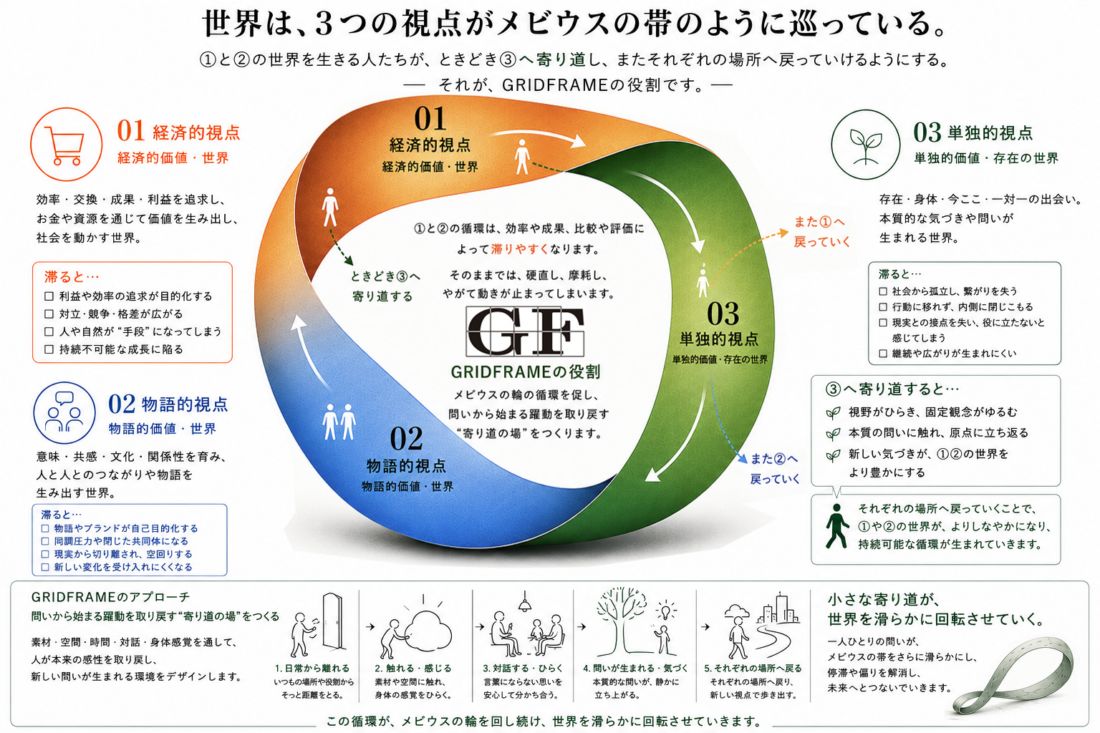
③ gives rise to ②, and ② is consumed by ①; eventually, the vitality of ② fades, and people return once more to ③. …We are walking along such a Möbius strip.
The sense of stagnation Mr. Yotsumoto felt in Kyoto did not stem from a lack of economic success in the beauty industry. On the contrary, it was precisely because the industry was functioning and succeeding so well that its established meanings and methods began to rigidify, causing it to lose that sense of vibrant, living engagement. (A state where ② had become fixed within ①.)
What he encountered in Paris was not some polished, idealized image of a modern hair salon.
He met people who carefully assessed the nature of the hair, truly engaged with the person before them, and sought out—in that very moment—forms that had never existed before.
There, the priority was not to quickly reproduce a set style, but to create something that could only come into being right then and there.
To me, that encounter seems like the moment when Yotsumoto-san once again turned a singular perspective—a unique, individual viewpoint—toward meanings that had previously become fixed.
Dismantling the shop in Kyoto after returning to Japan and keeping only an easel there;
Stumbling upon the property in Tokyo in 2008, almost by chance;
And then, creating “Real Clothes” in Shimokitazawa.
None of these actions were taken merely to discard the meanings of the past.
Rather, they represented a process of “shedding one’s skin”—a way to create a space where he could continue to create in a truly inventive manner.
The “Real Clothes” space established in 2008 served as an atelier where Yotsumoto-san, as a creator, could pour his full energy into his work without holding anything back.
…Eighteen years have passed since then.
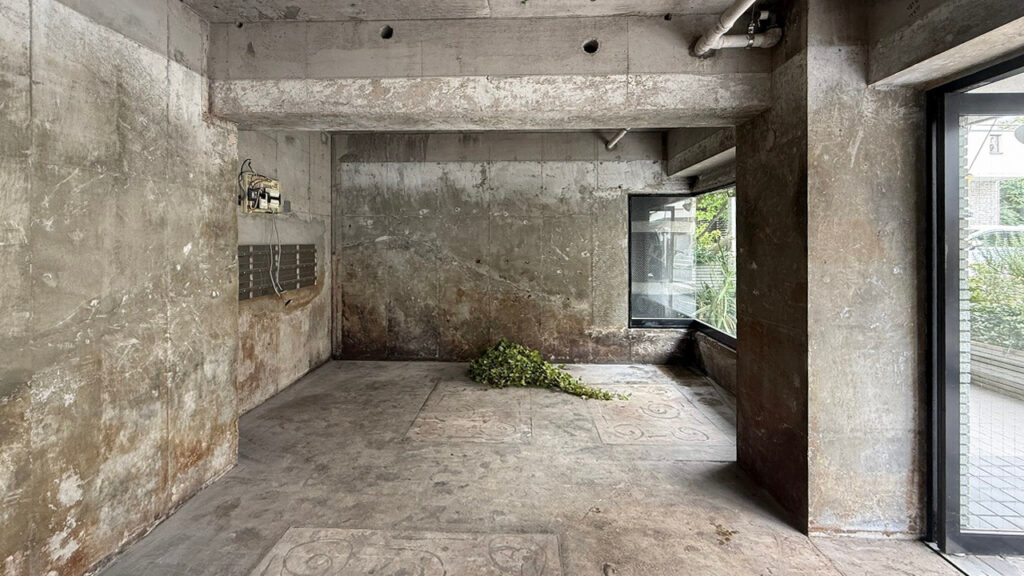
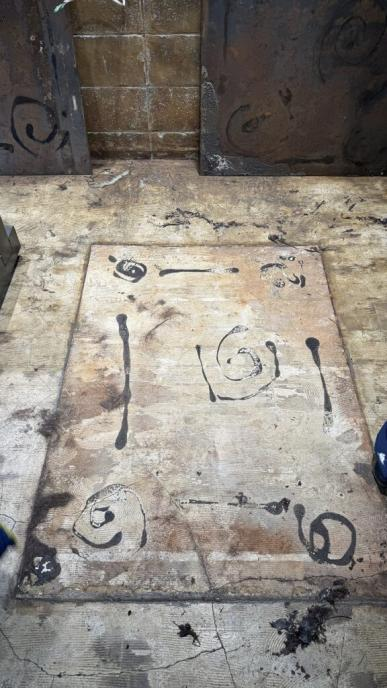
After the dissolution of Real Clothes 2008↑
Both Yotsumoto-san and I have walked along countless small Möbius strips over the years—some as brief as a single breath, others as long as a lifetime.
For the new “real clothes” shop we are creating in Ikenoue in 2026, we envisioned a space where the very act of entering, getting a haircut, and stepping back outside forms a small Möbius strip.
You leave through the same entrance you used to arrive.
Yet, you are no longer exactly the same person you were before.
We designed the space with specific elements to make that subtle transformation possible for each individual.
【Earthen Boat】
“Why is something like this here?”—that is how we feel about the things we create.
It is a strange notion, yet an honest one. If one does not feel this way, then any attempt to create a “planned dissonance” has failed from the very start.
The things we create do not rest in the palms of our hands.
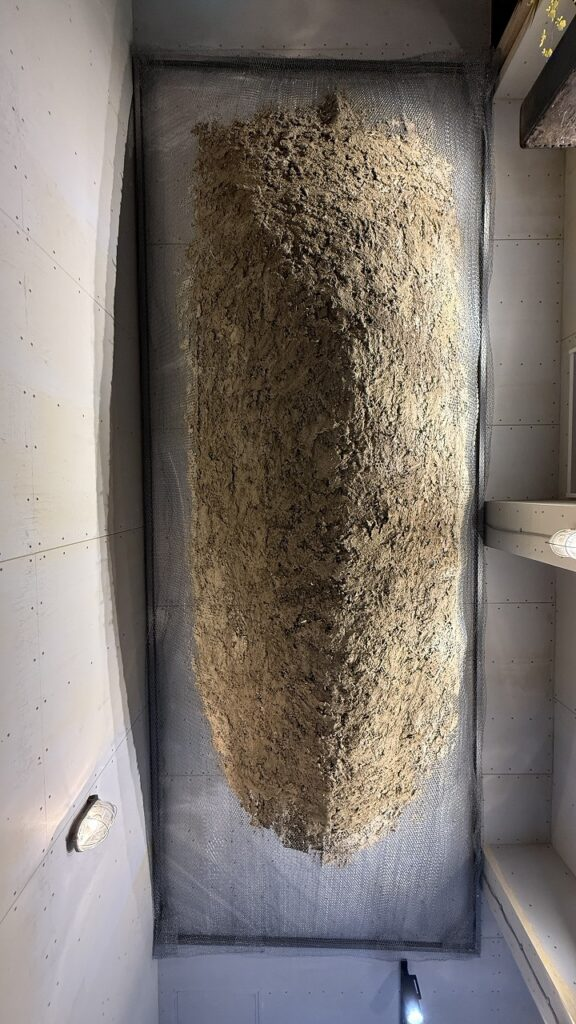
【As a small Möbius strip】
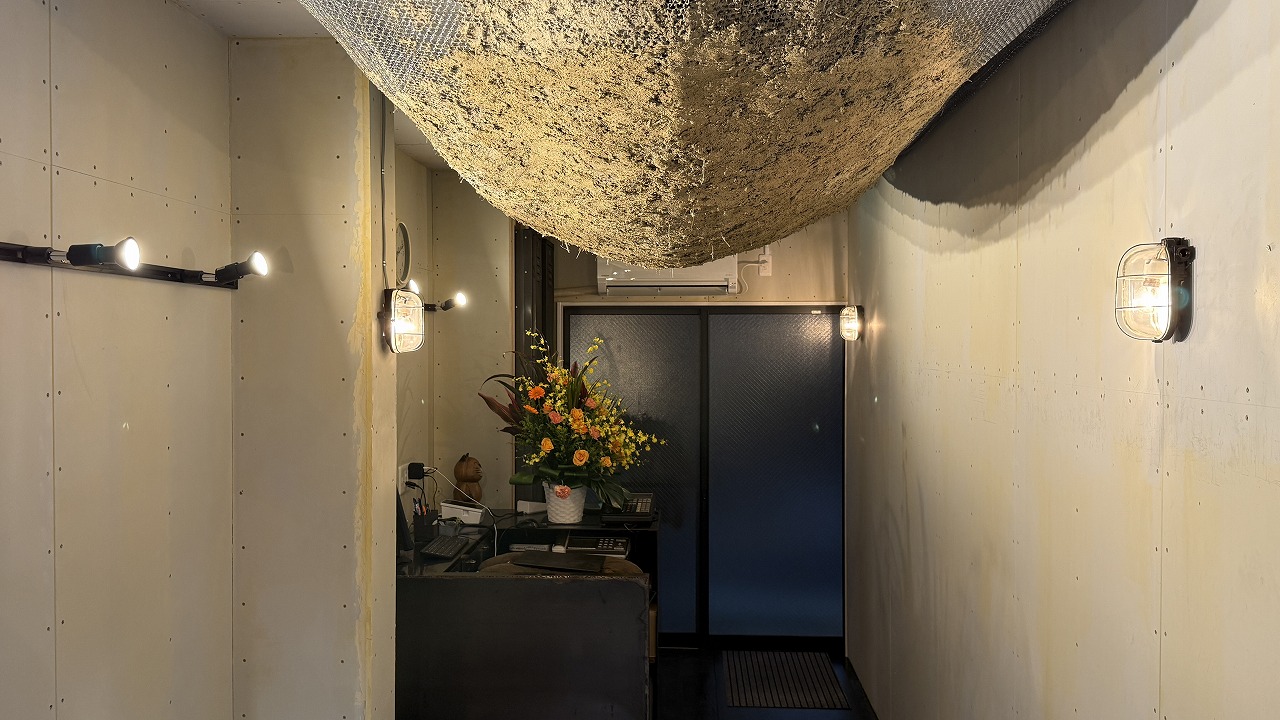
RealClothes 2026 Lying down beneath the mud boat↑
Of course, we prepare meticulously.
We consider every detail: the production and adjustment methods, the extent of the mesh’s expansion, the final weight, the soil’s adhesion strength, whether the amount of shedding falls within acceptable limits, the texture and color of the finish, and the risk of mold growth.
Drawing on our past experience, we proceed with a strategy that is as precise as it is bold.
Safety is the one non-negotiable priority. Ultimately, however, there is always the risk that a series of compromises will be made to ensure that safety. No production process is without tension.
Holding our breath and pouring our intent into the work, we layer on the materials.
Yet, the result transcends both our expectations and any preconceived notions.
In the end, it is not something we simply “do”—it is something that “becomes.”
Something appears before us—something even we have never seen before.
I lie on the floor, look up at the Tsuchifune (soil vessel), and take a deep breath.
・・・・・・・・・・
For the plaster, they mixed water with clay donated from old sake breweries and houses that had been damaged in the Noto earthquake, and applied the resulting mixture.
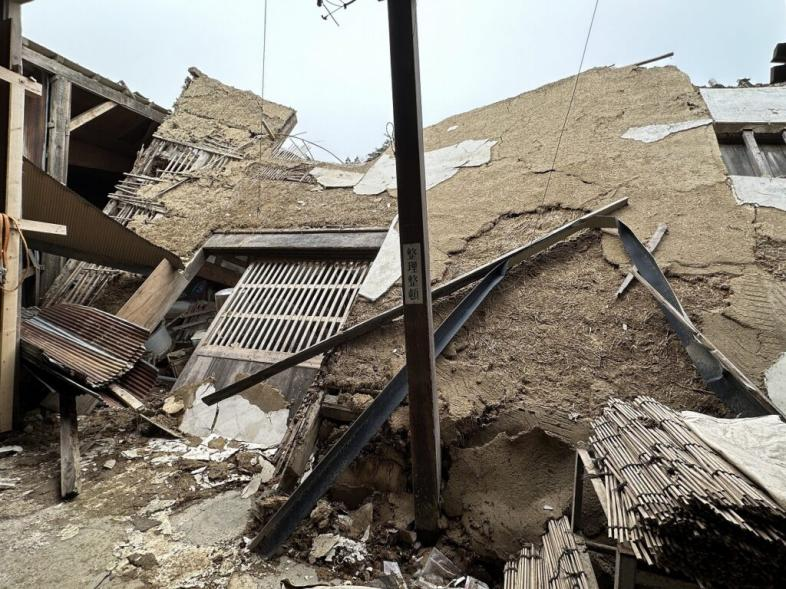
↑Matsunami, Noto Town: Earthen wall of a sake brewery with a 150-year history
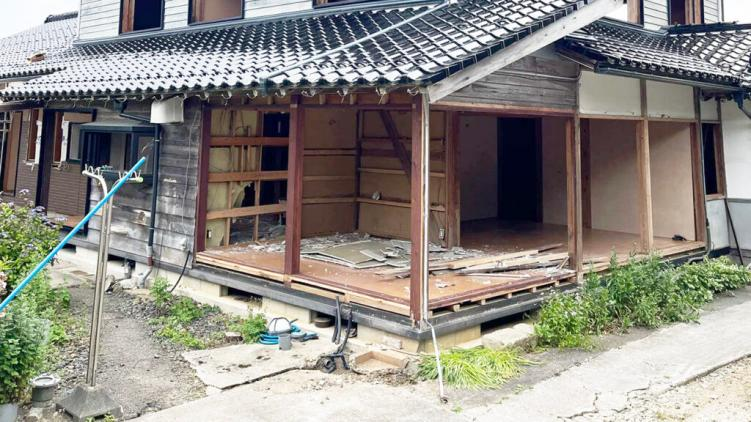
Noto Town/Anamizu Town: Earthen wall of a residence↑
【A small Möbius strip】
To “pass beneath the earth” is to traverse a space defined by gravity, instability, softness, and the potential for collapse; the lingering physical sensation resets one’s mental state. Moving straight toward the back further accentuates the experience of having crossed through.
Passing through this primal material—earth—creates a psychological effect akin to a sound barrier that shuts out the urban clamor, allowing one to focus on communication while deeply confronting a self-image that is constantly being renewed in the mirror.
When you leave after your haircut—passing back beneath that earth—you may perceive the “presence of the earth” somewhat differently than when you first entered.
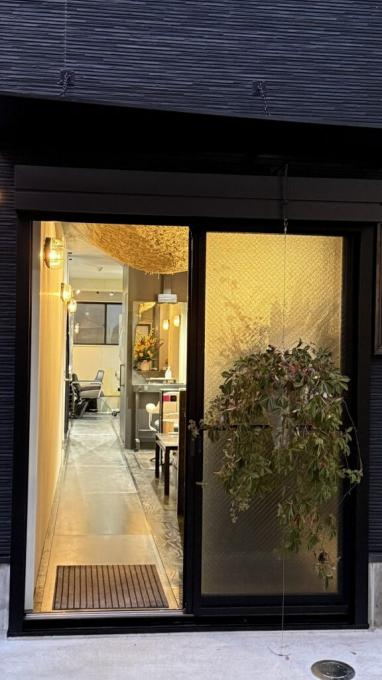
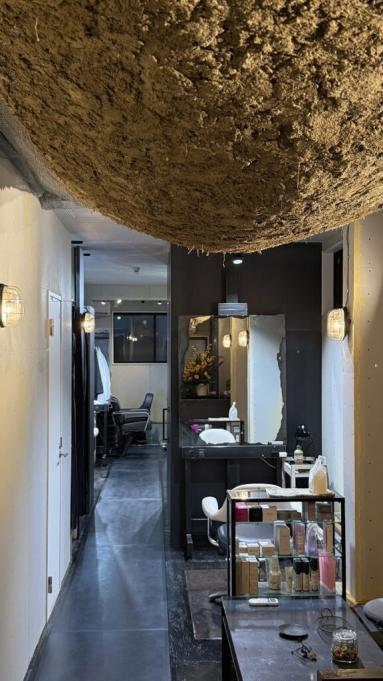
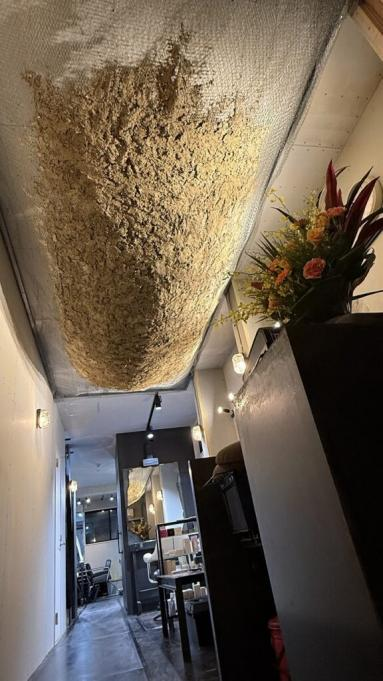
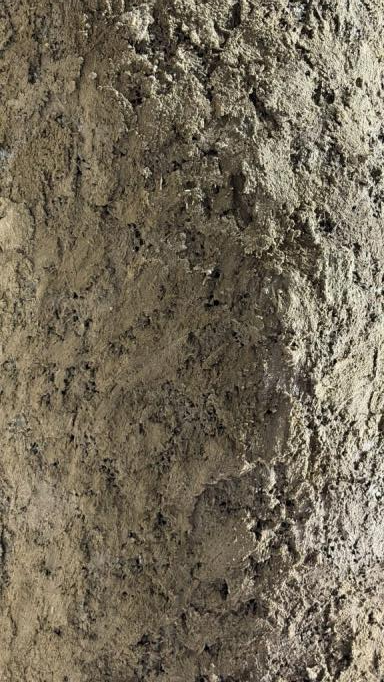
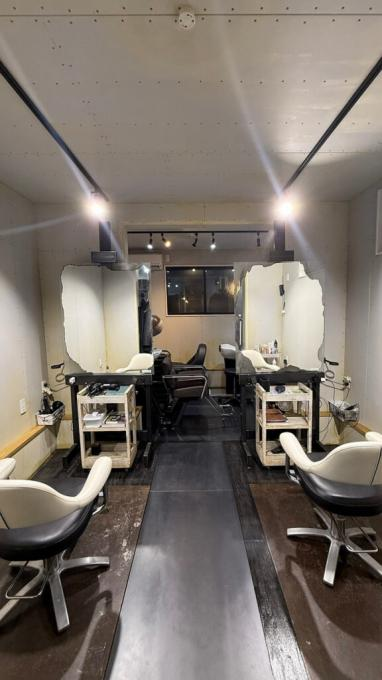
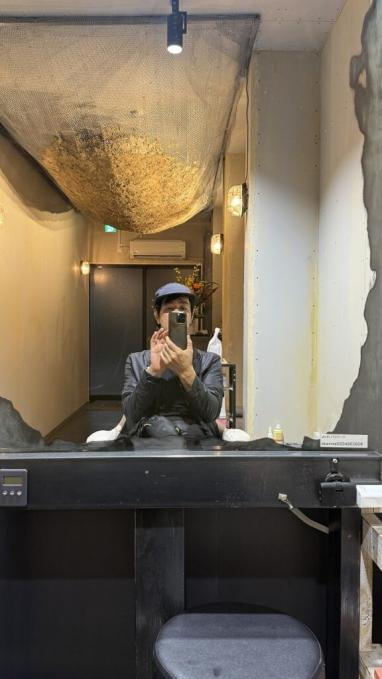
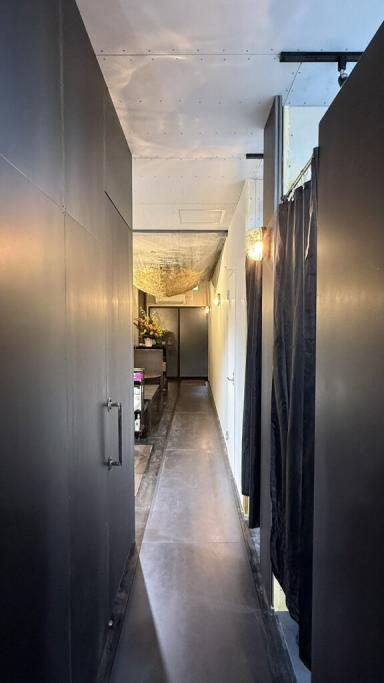
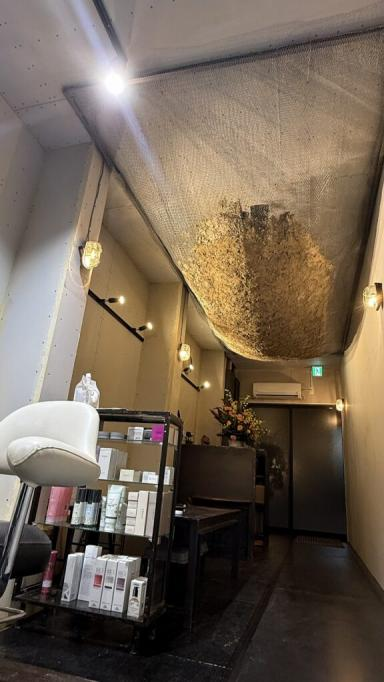
【As a small Möbius strip】 Real Clothes 2026 A Small Möbius Sequence
【Enveloped by the earth】
A restroom might be a place where, no matter where you are on the map, you can return to the womb all on your own.
While the “Earth Boat” places people on the outside of the arc, here, they are positioned on the inside. Enveloped within, they are bathed in soft light—reminiscent of sunlight filtering through the trees—that streams in from between the earthen masses.
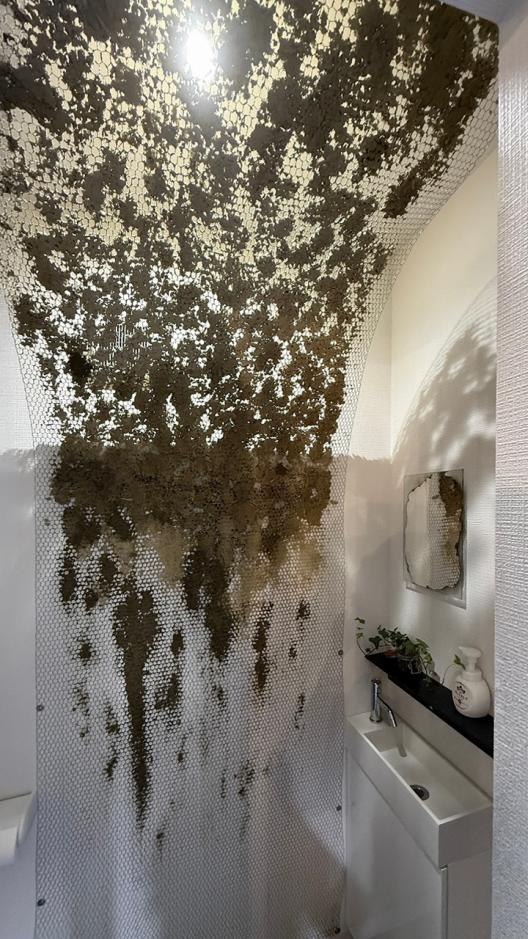
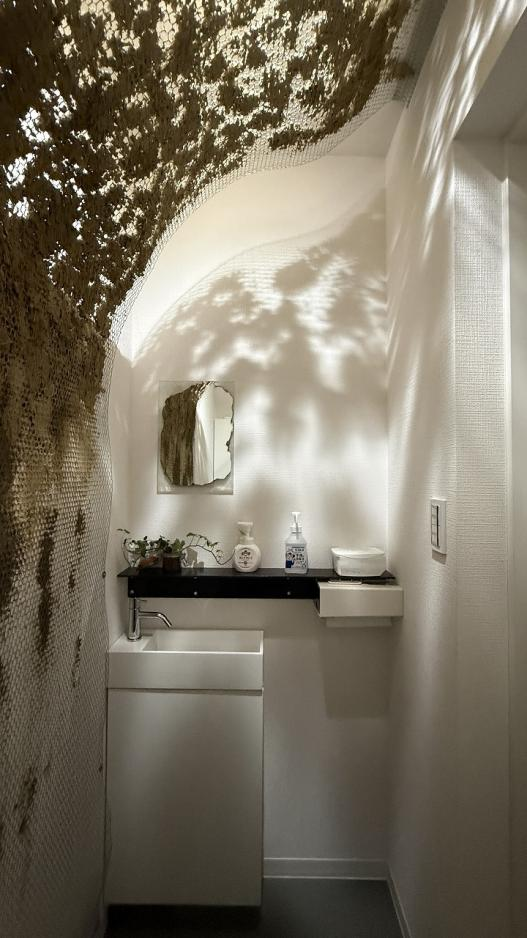
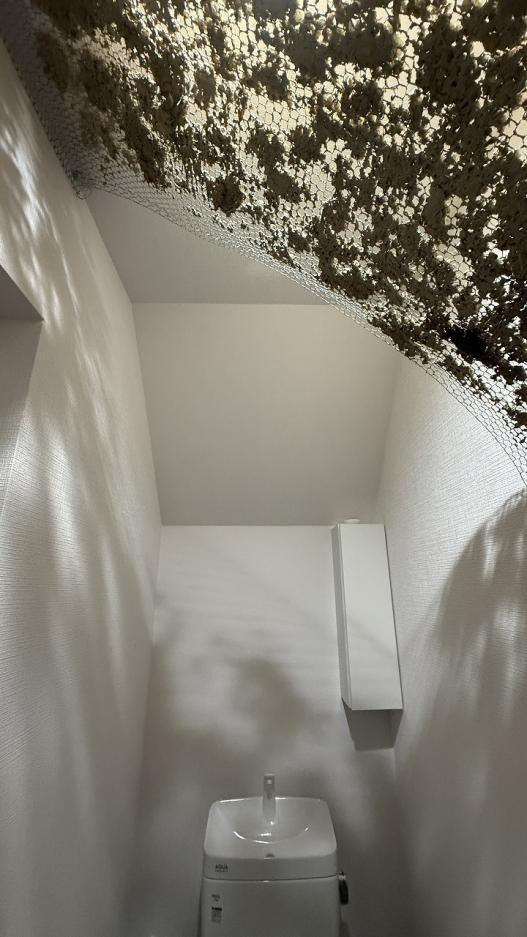
【As a small Möbius strip】 Real Clothes 2026 Enveloped by an earthen arch
【Like the makeup of a Kabuki actor】
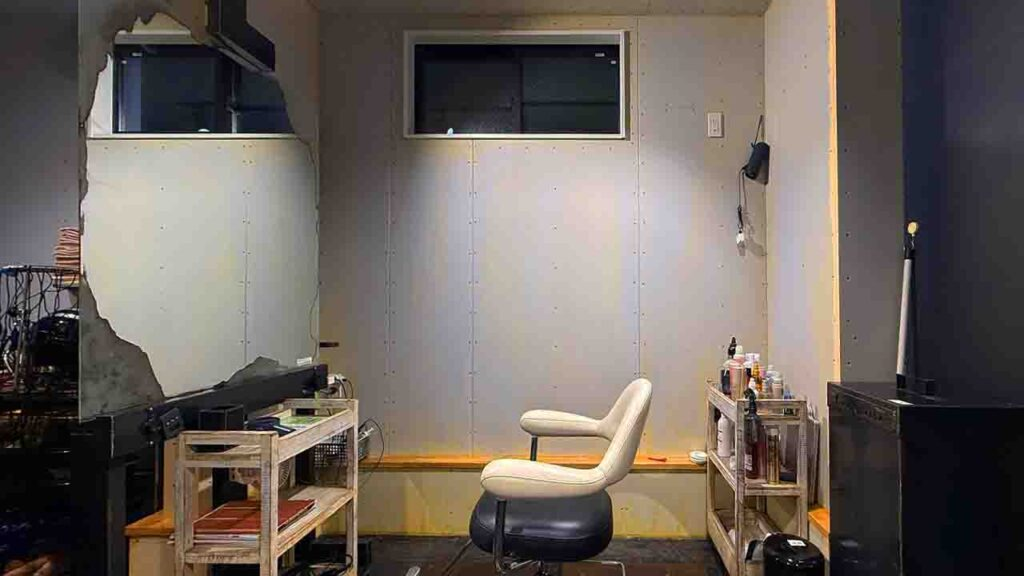
【As a small Möbius strip】 Real Clothes 2026 Enveloped by an earthen arch
Initially, the space was enclosed by plasterboard. Wanting to preserve and utilize the existing materials as much as possible, I layered thin coats of white over them.
It began to take on a sensuous appearance, much like a Kabuki actor wearing white makeup over a natural complexion. Perhaps due to that sense of warmth, the styling area felt as though it had existed there all along.
<Direction of generation>
Lately, I feel as though the world has become increasingly hollow.
Of course, there is no shortage of beautiful architecture, appealing products, or vast amounts of information. Yet, my body fails to respond to them.
I used to believe the world was something more solid and certain. Perhaps, however, that sense of solidity was merely superficial.
So, how can we create a world with true substance once again in this day and age?
I would like to offer a proposal from the perspective of creating spaces.
To put it simply, it all comes down to starting the process of creating a space from the concrete people and objects right in front of us.
Body → Perspective → Value → World
We build the world in this direction. The body reacts to an entity right before us; a perspective emerges, value is created, and finally, the world takes shape. This is the trajectory of something coming into being.
On the other hand, the sequence of
World → Value → Perspective → Body
works by tracing back from an existing worldview.
If the desire to create a space embodying a specific worldview comes first, you then narrow down your target audience based on the values required to realize that vision, and dictate the perspective from which the space should be viewed—effectively closing off the world.
This approach fails to reach the body, which reacts to a space instinctively, before the mind even begins to process it.
When detailed design plans precede the choice of materials, scouring the market for something that fits those plans is nonsensical; consequently, materials are almost invariably selected from catalogs. Despite the Earth abounding with fascinating materials, the same few types are used everywhere.
Furthermore, if a material that happens to approximate the ideal is found, it often leads to forced justifications or fabrications. In this way, the true essence is overlooked.
If your body reacts to spaces by feeling a sense of hollowness or emptiness, this is likely the reason why.
While we were building an earthen boat near the entrance, groups of elementary school students on their way home would stop and watch intently as they passed by. Some even asked, “Why is the soil on top?”
“I wonder why?” …We didn’t know, either.
・・・・・・・・・・
We look forward to sharing more about SOTOCHIKU’s various activities in the next issue.
<SOTOCHIKU Newsletter Archive>
You can view all past issues on our archive page:
https://sotochiku.com/category/tsu-shin-archive/
We would be delighted to hear your feedback or any requests regarding the SOTOCHIKU newsletter.
Thank you for your continued support.
If you wish to unsubscribe, please contact Tanaka via Facebook message or email at tanaka@gridframe.co.jp.
June 30, 2026 GRIDFRAME Toshio Tanaka



Comments are closed