The technology of bringing heat back into the future
Hello everyone, how are you doing? This is Tanaka from GRIDFRAME.
This is quite sudden, but…
GRIDFRAME is changing into a company devoted to ”the technology of bringing heat back into the future.”
<From “Turning the Present into the Past” to “Turning the Future into the Past”>
[A Society That No Longer Touches Materials]
Around 2004, I came up with what I call the Chain of Creativity.
I had begun to feel that the conventional commercial process of making things—in which designers work out every detail before fabrication and construction begin—was fundamentally a system that deprived the people who actually touched the materials of the chance to create.
When I was an architecture student, I always wanted to use, as much as possible, the actual materials that would eventually be used in the building when making models.
While most students made models at 1:100 scale, I would make mine at 1:25. They became so enormous that I sometimes could not get them out through the door. Once, I found an empty room in a neighboring building and simply occupied it without permission.
For someone like me, it seemed completely natural that you would discover how to use a material by touching it on site.
I believed that this was precisely where creativity began.
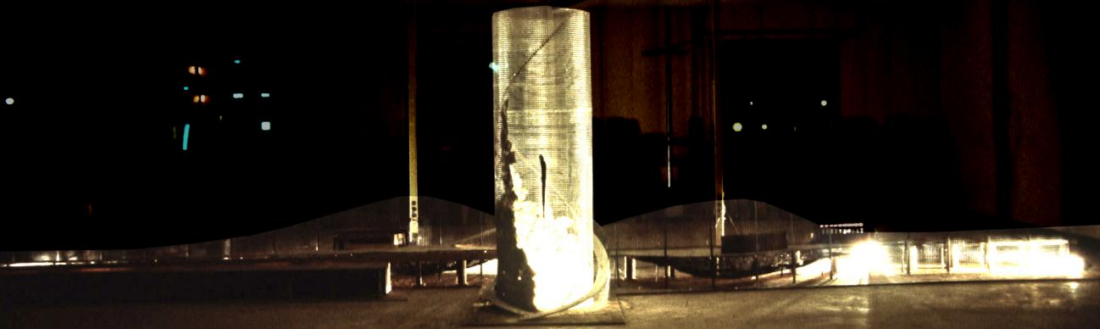
1995 — Railway Station, inside the Mathematics Department building
But once I began working professionally in spatial design, I found myself surrounded by a system in which this seemingly obvious principle had no place.
The people actually making the space simply traced what the designer had already decided, exactly as instructed.
When I started GRIDFRAME, I wanted to create spaces creatively, so I invited people who had studied art and architecture to join the company.
But I already knew that even if I gathered people capable of “thinking and making for themselves,” the existing system would never allow those abilities to flourish.
That was why I developed the Chain of Creativity.
When several people come together to structure—or create—one large thing, each person’s small act of creation is connected to the next.
I call them “small” acts only from the outside.
Seen from within each individual, every one of them may be an encounter with infinity—an act of creation upon which a person might stake an entire life.
Through this process, a structure gradually takes shape and meaning is generated.
At the same time, through the action of time, that structure and meaning gradually disappear.
Perhaps human beings can continue climbing upward in a spiral through this cycle.
This is clearly different from being told:
“Make exactly the same thing anyone else could make, exactly as instructed.”
And because it was different, I believe all of us at GRIDFRAME have been able to continue making things with an extraordinary intensity of energy.
A space made as the accumulation of many freely created things—each made with great intensity by a different maker—can pass that intensity on to its users through another Chain of Creativity.
The space can then continue changing flexibly with the times.
Our clients themselves must already have possessed an unusual degree of passion. Otherwise, among the thousands of companies that make spaces, they would never have found us and entrusted their spaces to us.
Again and again, I have experienced the immeasurable force that emerges when the extraordinary energy of a client meets the extraordinary energy of the people making the space.
That force moves the people who enter it.
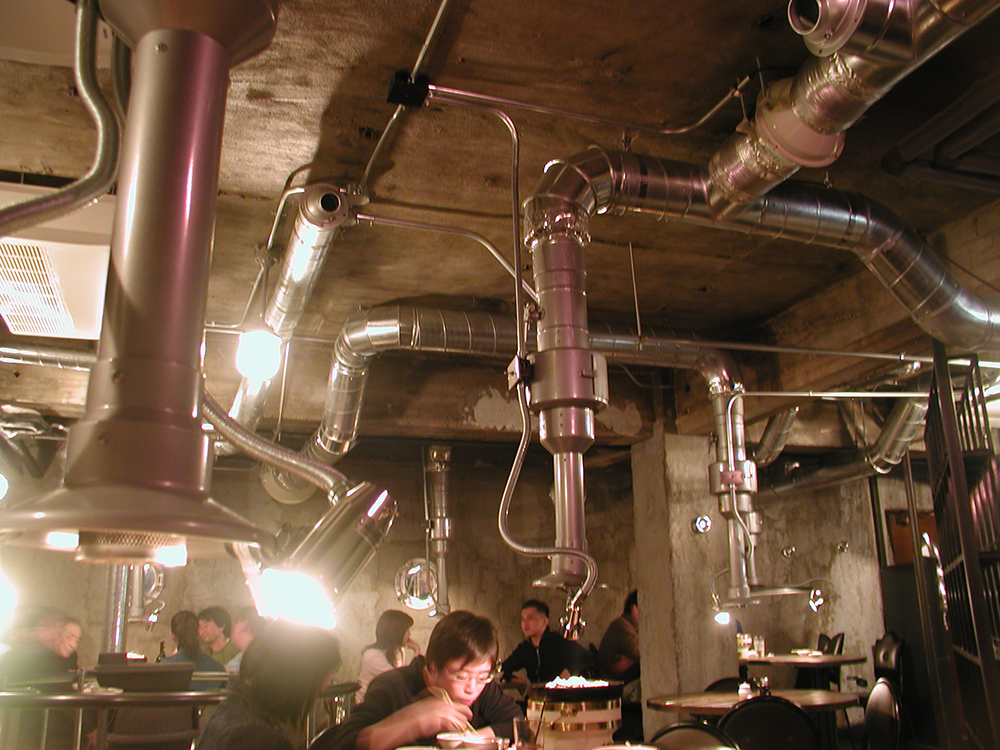
2005 — Akamaru Jingisukan, Yotsuya-sanchome
…
[A Society That Turns the Present into the Past]
Looking back, I think what I was fundamentally resisting through the Chain of Creativity was this:
Within the conventional system, makers are unable to work with the feeling that the present is open toward the future.
If all I am doing is making something that has already been decided, then there is no reason it has to be me.
For someone who wants to live by making things while deciding for themselves what should be made, this is only natural.
The future is open.
The past is closed.
The future can still be changed by what we do, while the past has already been determined and can no longer be changed.
Then what about the present?
Is the present open?
Or is it closed?
If, in the work by which I make my living, I am required only to make something that has already been decided, then the present is closed.
The present is being treated as though it were already the fixed and irreversible past.
In that sense, perhaps we could call this “a society that turns the present into the past”—
a society that deprives us of the possibility of choosing in the present.
Within only a few years of founding GRIDFRAME in 1998, building materials became rapidly catalogued and standardized.
Things that previously had to be thought about and made could increasingly simply be purchased from suppliers.
In this way, society continued moving further and further toward turning the present into the past.
And yet, looking back from 2026, there was still something that could save us in that period.
…
[Toward a Society That Turns Even the Future into the Past]
Recently, I happened to pass a convenience store that had just opened and was being presented as a “next-generation convenience store.”
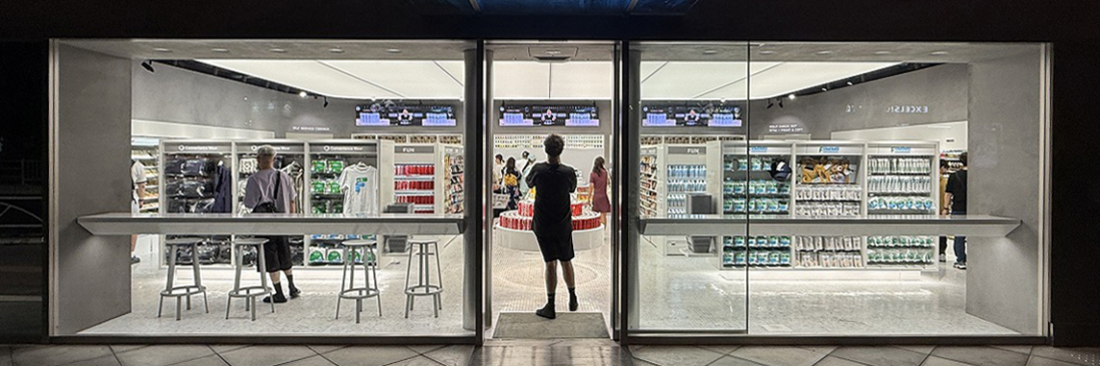
There was nothing particularly remarkable about it.
It was a stylish box, carefully finished in every detail.
Throughout my lifetime, the center of the age has been running in this direction:
clean, refined, simple, comfortable, convenient spaces.
Even the interviews with the people who created the store feel strangely matter-of-fact.
I cannot sense any excitement in them.
I have felt the same atmosphere in many large-scale development projects in recent years.
Perhaps even some of the people who occupy positions from which they can move enormous amounts of capital are beginning to feel, physically, that the current system of values can no longer take us anywhere new.
Perhaps this is a sign that the future—which ought to be open—is beginning to close.
Why would that happen?
Market research.
Successful precedents.
Evaluation metrics.
Brand management.
Risk avoidance.
Efficiency.
Predictions made by AI and data.
As all these things accumulate, a powerful force has begun to operate in our society:
the force that explains the future before the future has even arrived.
Predicting the future and generating the future are not the same thing.
When we predict the future, define it in advance, and then work backward from that future to determine the present, the future is treated as though it were already the past—even though it has not yet arrived.
Perhaps we are now moving toward “a society that turns the future into the past”—
a society that takes away the very possibility of generation within the future.
Around the year 2000, when I criticized the society that was “turning the present into the past,” one person I sometimes imagined was Mies van der Rohe, one of the great architects of the twentieth century.
Mies strongly insisted that his buildings, down to their interiors, should retain the form in which he had completed them.
Their future had already been decided in advance by the architect.
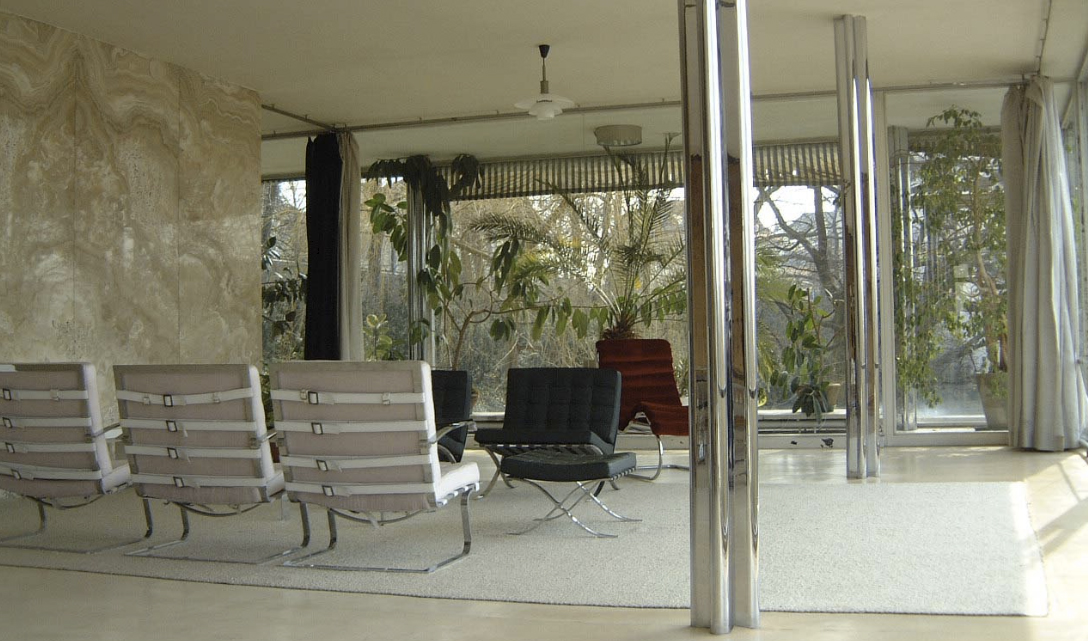
Mies van der Rohe — Villa Tugendhat (image from Wikipedia)
And yet society continued to function perfectly well.
No matter how much one criticized it, it was stable enough not to be shaken.
Perhaps there was still passion—still heat—within that society.
Then, beginning around 2010, social media spread rapidly.
Suddenly anyone could see images of the newest and most talked-about spatial projects from around the world.
Clients began coming to GRIDFRAME carrying such images, their eyes shining, saying:
“I want you to make exactly this space.”
Around the same time, computer-generated imagery advanced rapidly as well.
It became inexpensive and easy to produce spatial renderings that looked almost like photographs.
And the number of clients demanding them increased dramatically.
Of course, neither social media nor CGI is bad in itself.
When they first appeared, they generated tremendous excitement precisely because they suddenly opened up an entirely new world to us.
But human beings become accustomed to almost anything.
When we can look at outstanding spaces from around the world every day, every space begins to feel as though we have already seen it somewhere before.
When CGI allows us to see the finished space before it even exists, the completed space is no longer “something we are encountering for the first time.”
It becomes “something we already know.”
The future is consumed before it arrives.
Little by little, we lose the heat required to stake something on what has never yet been seen.
And as that happened, no matter how deeply we thought through our proposals, fewer and fewer of them were truly received.
Still, we continued resisting this tide.
We continued thinking through making, experimenting again and again through the Chain of Creativity.
We wanted our clients to wait with pleasure for something that even we ourselves did not yet know would emerge.
Because we have always believed that this state maximizes the energy of both client and maker.
Until around 2015, therefore, our proposals consisted only of hand-drawn perspectives that communicated the essence of the space while deliberately leaving out the details.
Eventually, however, even hand-drawn perspectives ceased to be accepted.
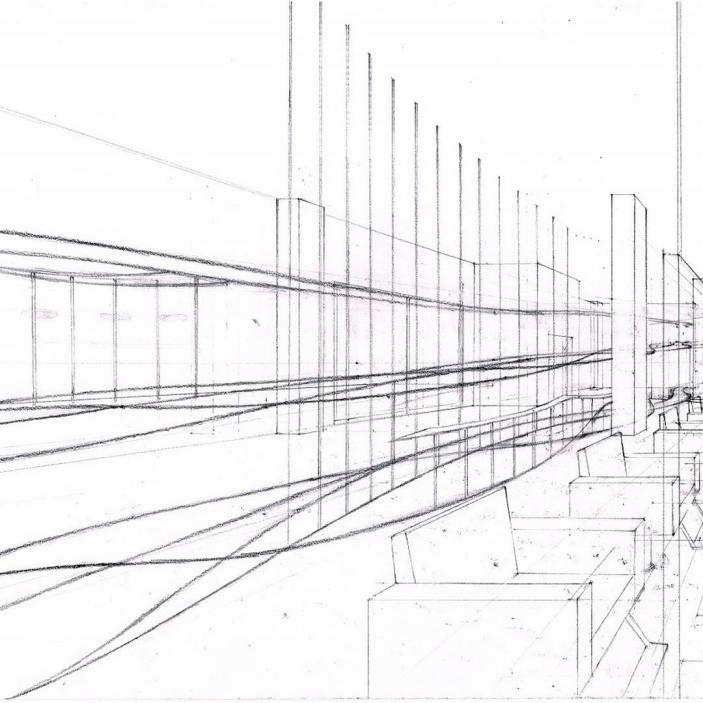
It had become difficult simply to wait for the future as future.
When I criticize the direction in which we are now moving—a society that turns the future into the past—I am worried about the future of this entire world, which seems to have grown cold.
If the future closes, excitement cannot arise.
Excitement can only arise where we still do not know what is going to happen.
…
[A Direction That Generates the Future]
There is another direction, opposite to working backward from the future into the present.
It is the direction that moves from the present toward the future.
I would like to call it:
the direction that generates the future.
We do not decide at the beginning what the finished thing will be and then work backward from that completed form to determine the present.
Instead, we touch the material that is here now.
We encounter a person.
We stand in the place itself.
We receive whatever happens there, and then think about what to do next.
When we work in this way, a future that we could not have imagined at the beginning gradually begins to appear.
Come to think of it, the Chain of Creativity was itself a method for doing exactly this.
Instead of one designer determining the completed form of the future and a large number of people accurately tracing it, each maker receives what has been made up to that moment, adds his or her own creation, and passes it on to the next person.
Of course, this does not mean deciding nothing.
We decide a direction.
We think about structure.
We take responsibility.
But we do not attempt to control every detail of the future from the present.
We leave space for materials, makers, and chance to enter.
Only then can something that could have happened nowhere else remain within a space.
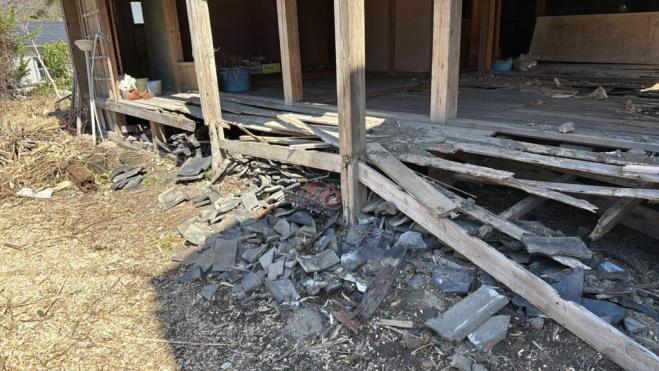
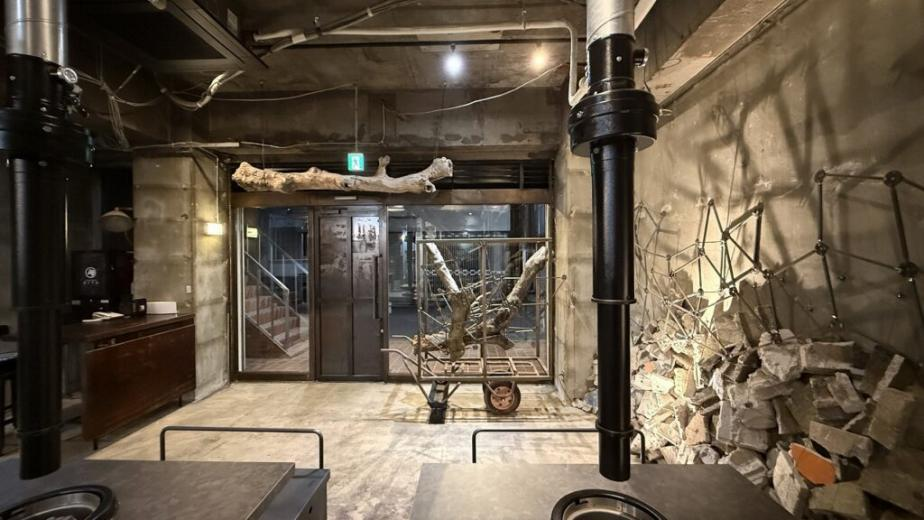
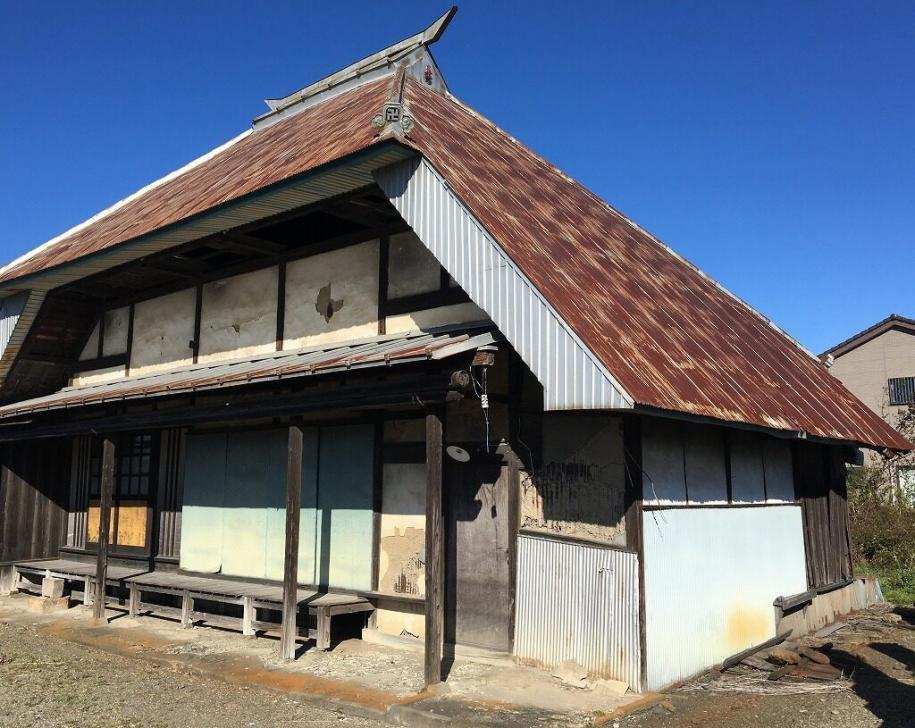
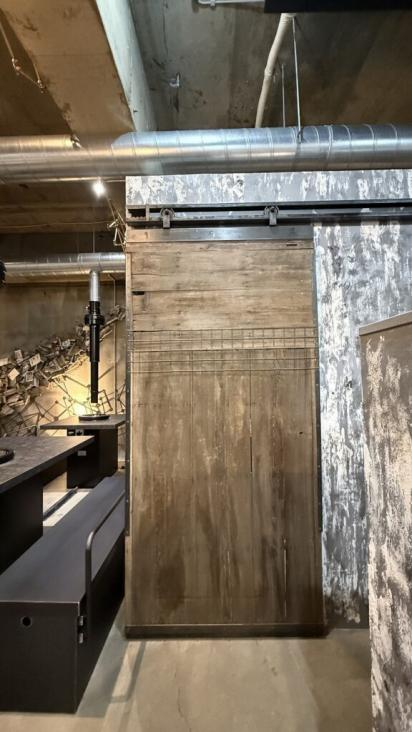
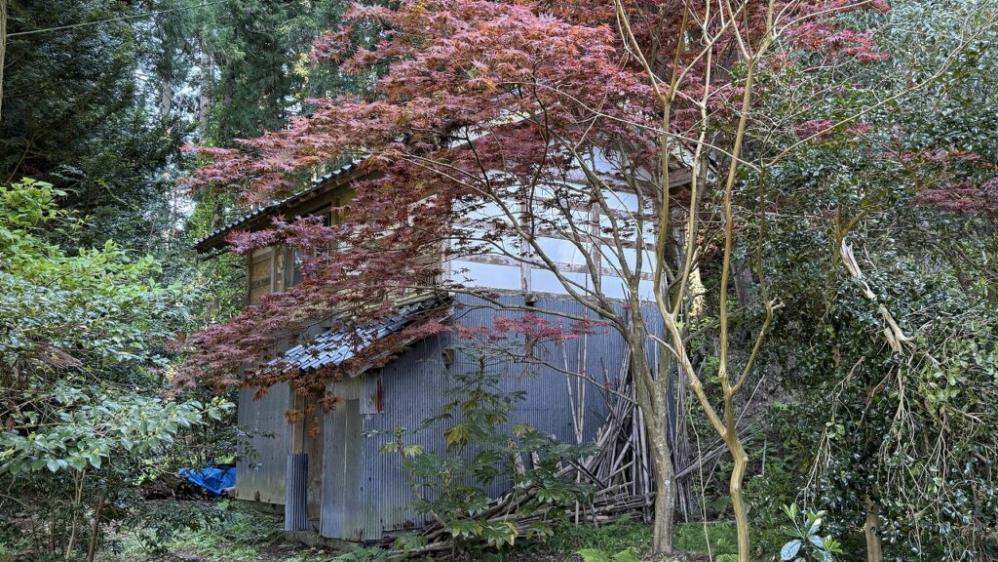
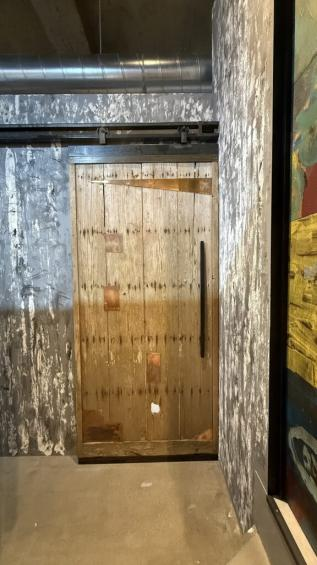
The broken things we work with through SOTOCHIKU are also deeply connected to this direction of generating the future.
Decaying wood.
Broken roof tiles.
Burned pillars.
Walls that have been stripped away.
Each of these things has, at some point, fallen out of the role it was originally given.
Something that was once a pillar is no longer a pillar.
Something that was once a wall is no longer a wall.
What it will become next has not yet been decided.
We are not drawn to broken things because they are old.
Nor simply because they are environmentally friendly.
I think we are drawn to them because an undecided future still remains inside them.
We bring them to the site.
We touch them.
We try placing them somewhere.
If the use we imagined does not work, we think of another.
If one maker discovers another possibility, we follow that possibility.
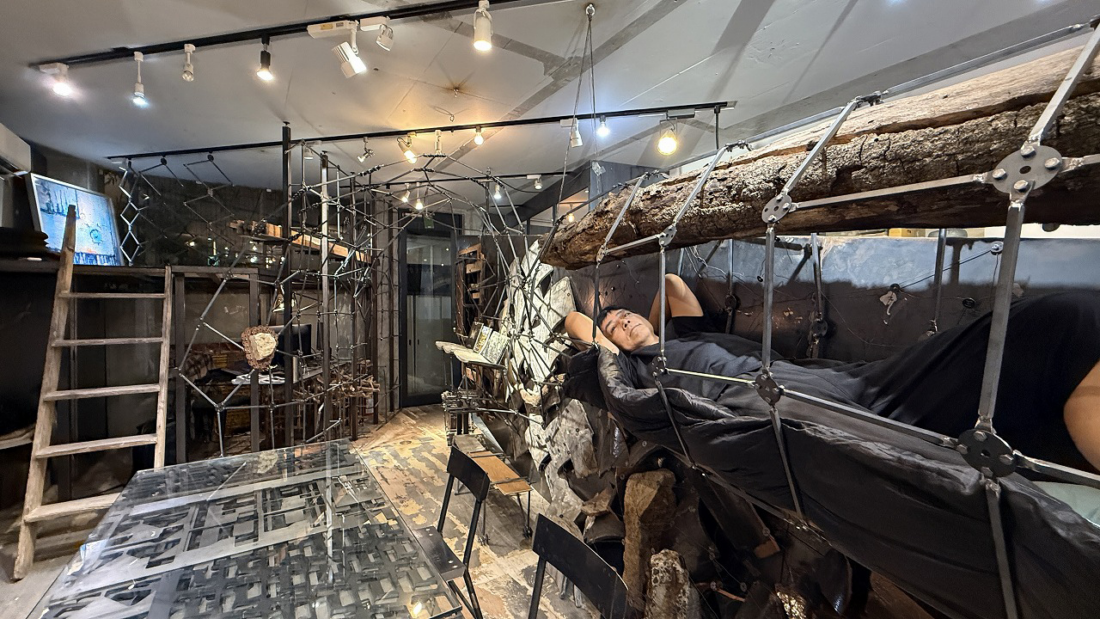
Eventually, it becomes difficult to tell whether we are using the object, or whether the object is teaching us how it wants to be used.
At that moment, the future ceases to be “a completed form that must be realized.”
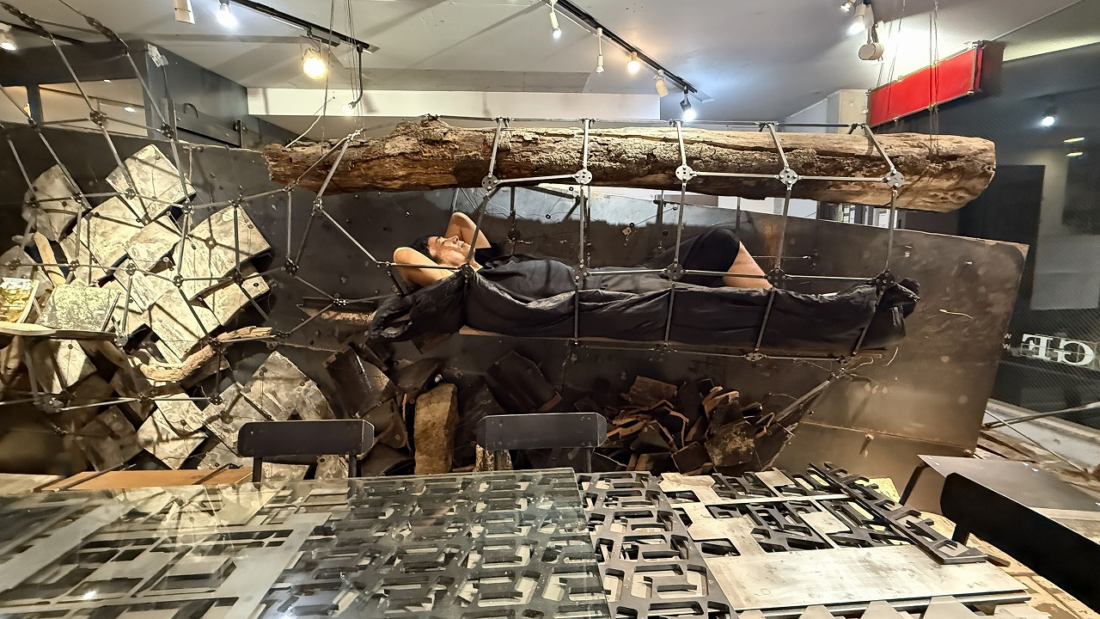
The future begins to reveal itself to us through our response to the present.
And generation does not end when construction is completed.
People use the space.
It becomes scratched.
It becomes dirty.
It is repaired.
Plants grow.
Someone else adds something.
Something that began through what human beings do becomes infiltrated by what time and other people allow it to become.
Little by little, the space leaves the hands of its author.
I think that is a good thing.
Generating the future does not mean doing nothing.
Nor does it mean simply leaving everything to chance.
It means refusing to occupy the entire future with our own intentions.
We do not stop doing.
Instead, we create a condition in which our “doing” remains open to “becoming.”
Because there is room for becoming, we can encounter something that we ourselves could never have imagined.
And at that moment, heat is born.
So bringing heat back into the future does not mean that someone stages excitement or injects passion from the outside.
It means creating, once again, places within the future where we still do not know what is going to happen.
It means returning to the future the room in which heat can arise.
…
<Mr. Im’s “Warm”>
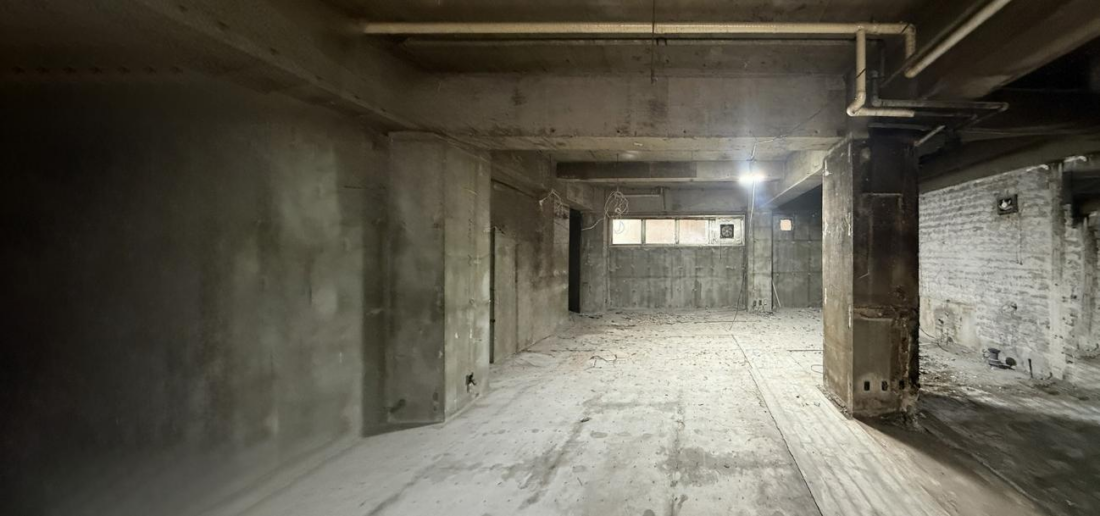
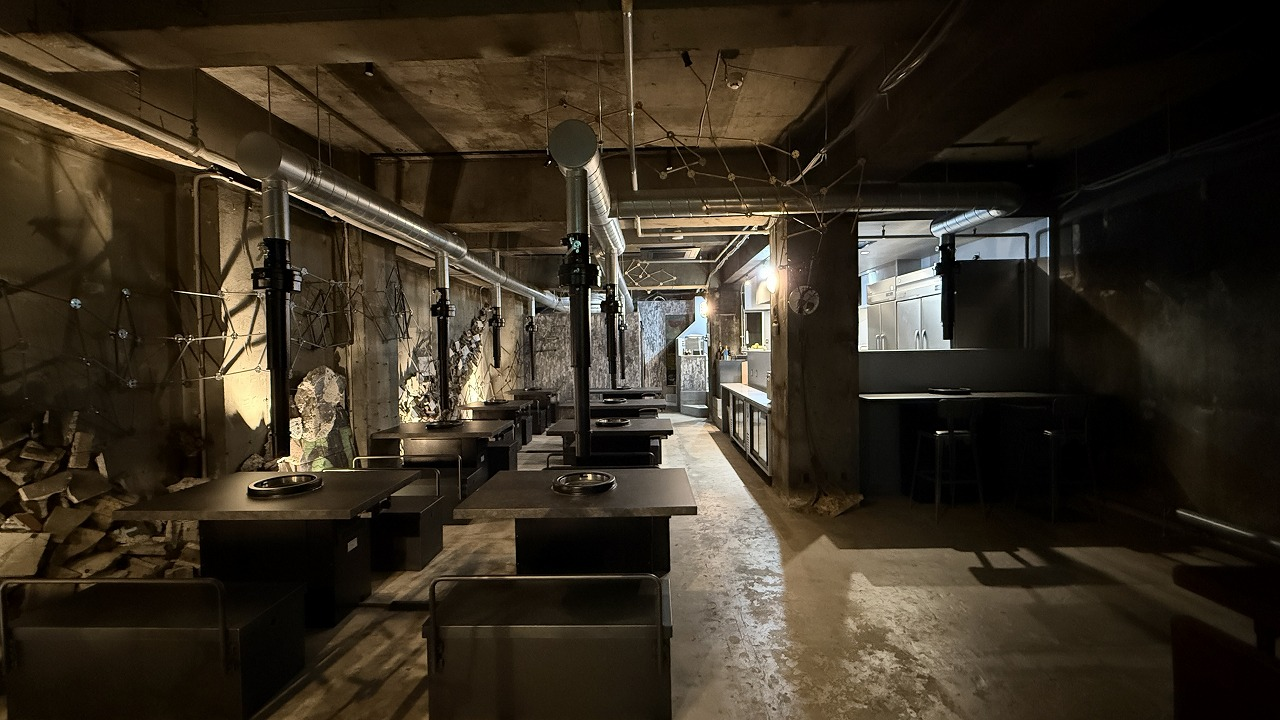
I enter the site for the first time after the previous store interior has been demolished, leaving only the bare concrete shell.
“The air has changed,” I say.
“It has,” Mr. Im replies.
“…It feels warm.”
The word stays with me.
Warm.
Because I imagine that far more people would describe such a place as “cold.”
What does Mr. Im mean by “warm”?
…
Old buildings contain many different presences.
Mr. Im is highly sensitive to such presences.
What he senses is clearly different from the surface impression perceived by most people.
He had also told us:
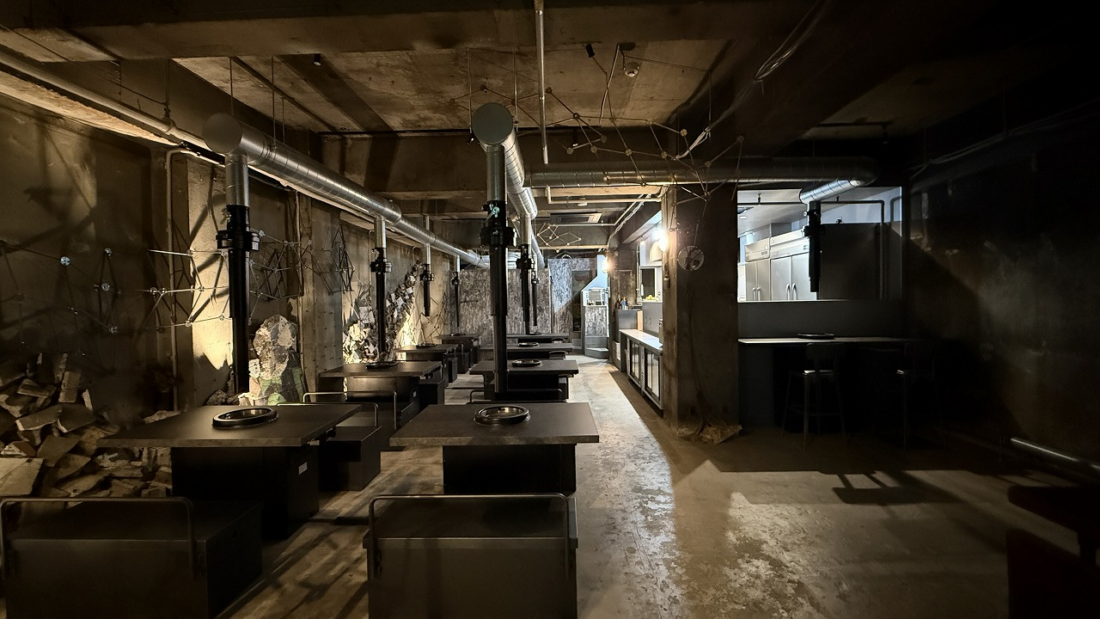
“I want a restaurant that feels like an underground parking garage.”
Perhaps the underground parking garage in Mr. Im’s imagination is “warm.”
…
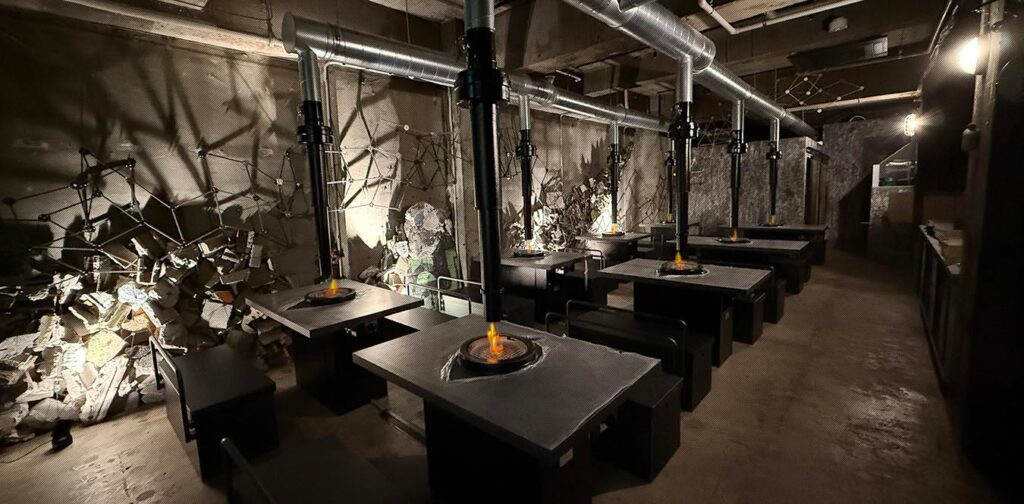
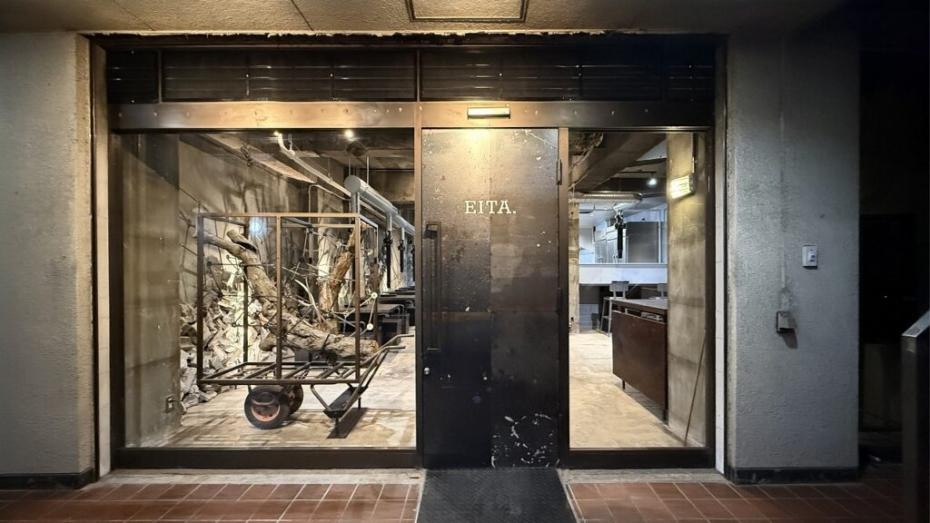
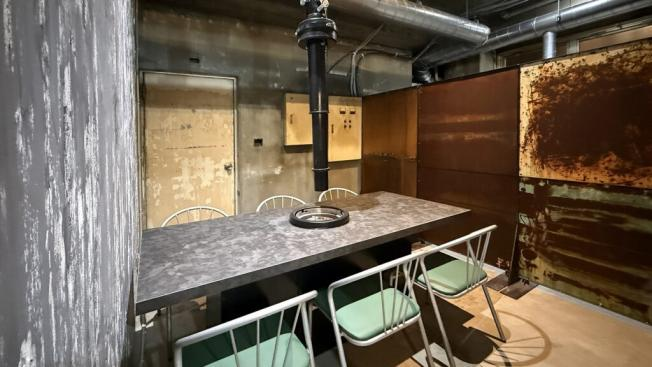
HORUMON EITA. is a yakiniku restaurant in Kodenmacho run by Taejin Im and his wife, Mayumi.
Mr. Im had worked as an engineer in Korea before coming to Japan in 2008.
While moving from one part-time job to another in order to support himself, he became fascinated by yakiniku restaurants and decided that one day he wanted to open his own.
In 2017, while still almost a complete beginner when it came to yakiniku and without even having established suppliers for the meat, he opened a yakiniku restaurant in Kodenmacho.
It was a small place only a few hundred meters from the new restaurant.
Mr. Im is the kind of person who laughs as he tells you:
“I used to go over to the tables of regular customers and pretend I was helping them grill the meat, while actually learning how to grill it myself.”
Whenever he encountered particularly good meat, he would travel anywhere in Japan to visit the farmer or producer and gradually build relationships with suppliers.
…
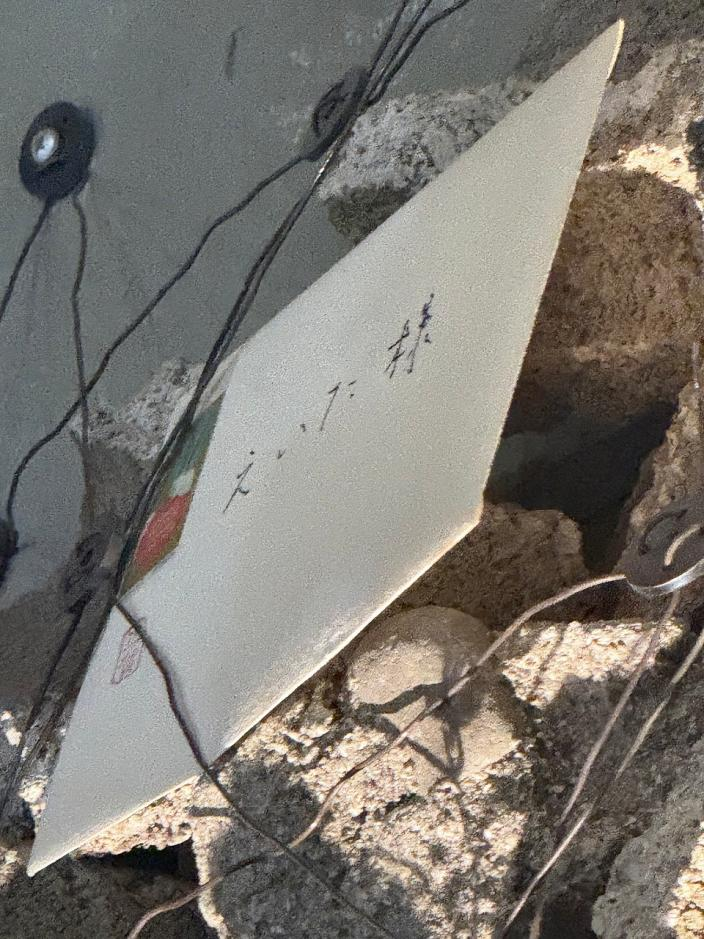
During the pandemic, when customers had almost disappeared and he was wondering whether he should close the restaurant, an elderly woman who occasionally came alone quietly handed him an envelope.
There was money inside.
She was someone with whom he had hardly exchanged more than a few words.
He was deeply moved.
Without that moment, the restaurant might have disappeared then and there.
“She is the person who saved me,” he says.
But she has never returned since.
He does not know where she is, and he has never been able to thank her.
“Maybe I changed from that day onward,” Mr. Im says.
Gradually, the restaurant became known as a hidden place where you could eat things available nowhere else.
Eventually, he decided to move into the much larger premises we are working on now.
…
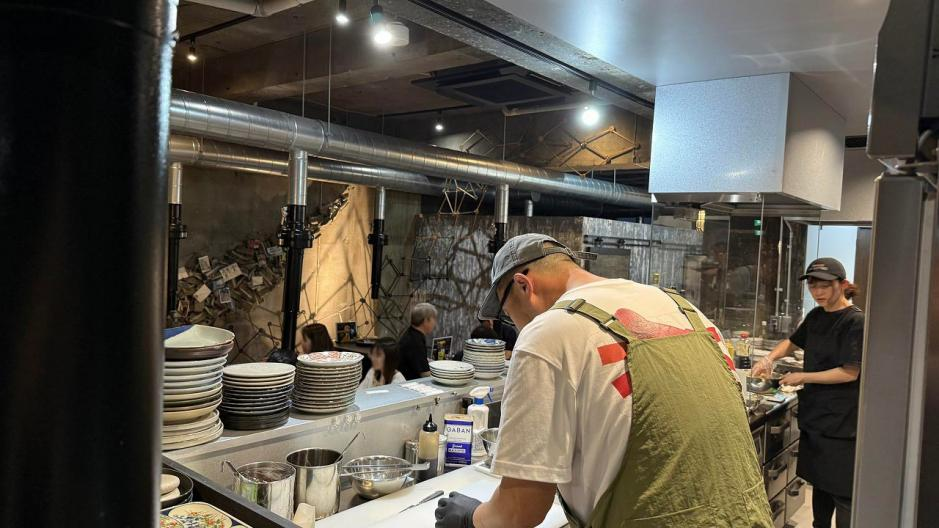
Many of the people who come to the restaurant work in Kodenmacho, but there are also many families with children.
As far as I can tell, Mr. and Mrs. Im love children, and children all seem to love Mr. Im.
He is big, strong-looking, gentle, and always smiling.
Seen through a child’s eyes, he is surely the kind of person whose arm you would want to hang from.
Some mothers even bring their newborn babies to him, saying:
“When I have a baby, I want Mr. Im to hold them.”
Perhaps they sense some kind of aura around him—as though simply being held by him might bring good fortune.
The adult regulars also look forward to Mr. Im coming over to their tables.
You can tell that everyone experiences Mr. Im himself as “warm.”
…
And yet Mr. Im’s sense of “warm”—the same man who says, “I want a restaurant like an underground parking garage”—is not something easy to explain.
As I have written many times in previous newsletters, when human beings encounter something, three perspectives arise:
The economic perspective
The narrative perspective
The singular perspective
It is obvious that Mr. Im’s “warmth” does not belong to the economic perspective.
What, then, about the narrative perspective?
An underground parking garage contains no special meaning.
No empathy.
No brand.
No history.
No philosophy.
If anything, it is a place that seems to have been abandoned by meaning.
In other words, Mr. Im’s “warmth” can only come from the singular perspective.
Perhaps what he calls warmth is the sense that something might emerge from a stark space to which no meaning has yet been assigned.
…
We are not trying to create a “warm space.”
Instead, through making, we want to explore where the “warmth” Mr. Im senses actually comes from.
Perhaps that presence does not arise by giving things meaning.
Perhaps it emerges where beings that have not yet become meaning encounter one another.
That is why we began experimenting with various forms of topological making—
making intended to strip away the meanings already lodged in things, so that the minds of the people who encounter them unconsciously begin to play.
…
[Shimokitazawa — The Graffiti Building]
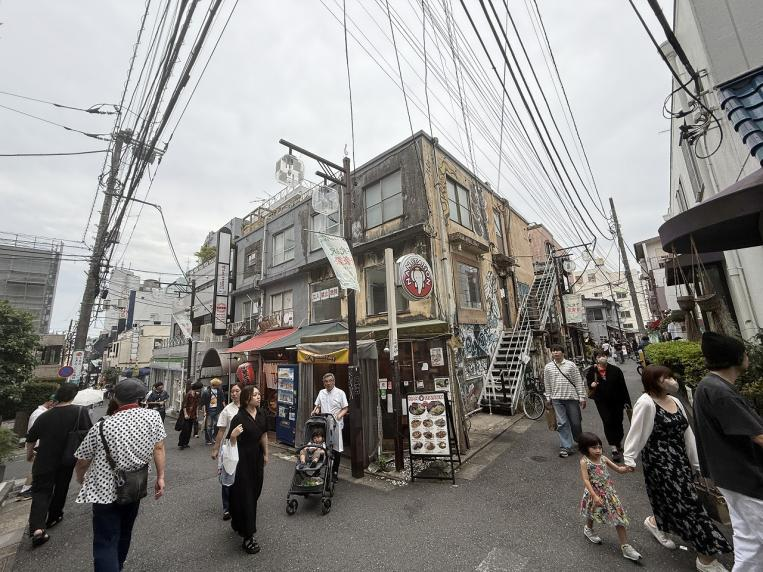
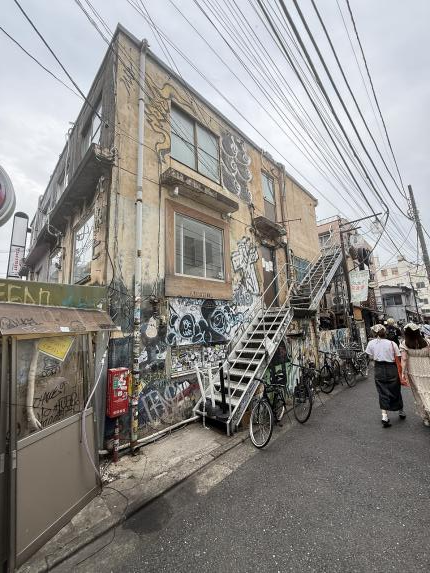
Shimokitazawa was the neighborhood where Mr. Im first had his hair cut after coming to Japan in 2008.
The salon was Real Clothes, which GRIDFRAME had designed that same year.
(See Vol. 20.)
He loved the salon and continued visiting it with Mayumi.
Mr. and Mrs. Im also enjoyed walking through Shimokitazawa.
One of their favorite buildings was Kitazawa Building, a particularly conspicuous old building completely covered in graffiti.
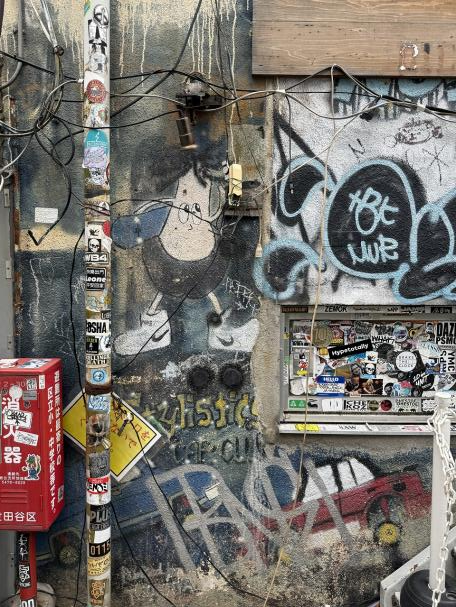
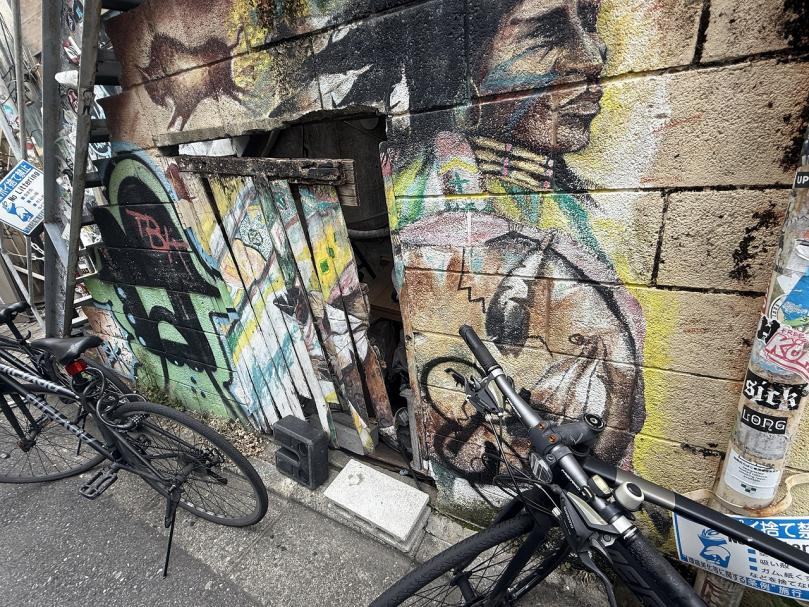
During the construction period of this new yakiniku restaurant, the building happened to be scheduled for demolition.
Kitazawa Building had become one of the symbols of Shimokitazawa, a neighborhood known for its subculture.
Whenever I visited, I would see young people in rock-inspired clothing taking photographs in front of its graffiti-covered walls.
Together with memories of the shops that had occupied it, I imagine many people felt sad to see the building disappear.
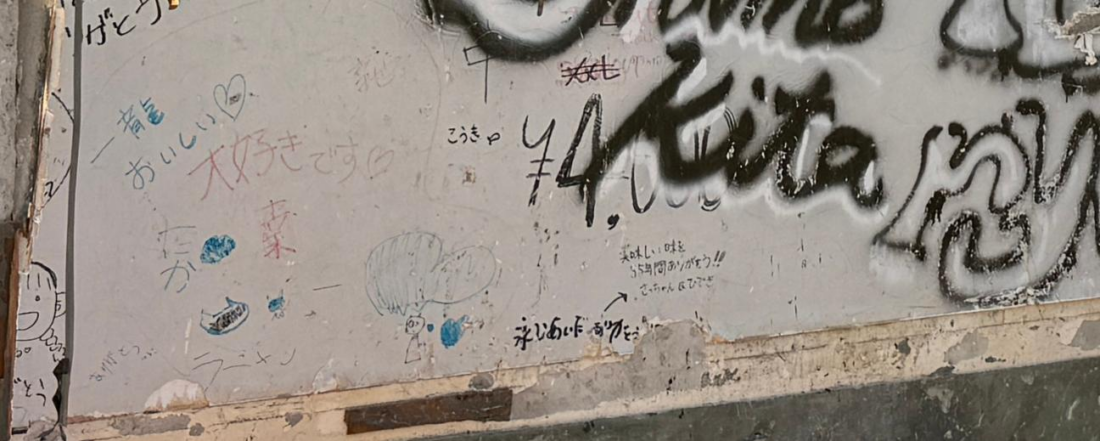
Fortunately, the owner of Ballondesse, a café we had created inside the building, spoke with the building owner on our behalf.
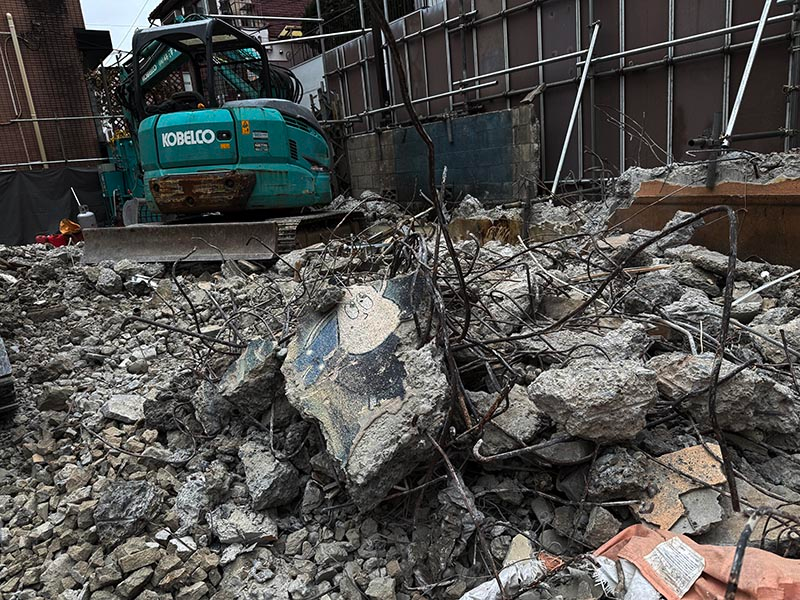
As a result, we were able to receive, as SOTOCHIKU material, the section of the graffiti wall that held the greatest energy.
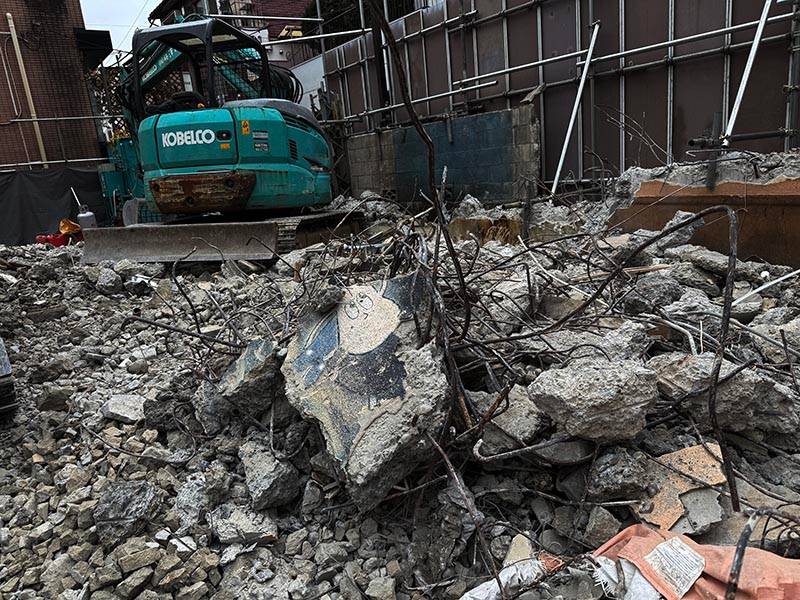
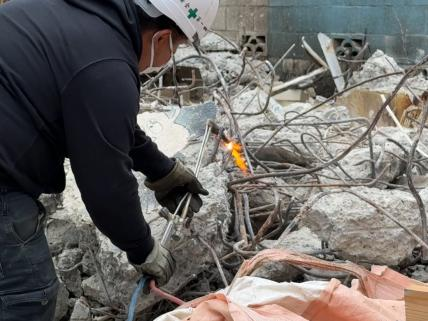
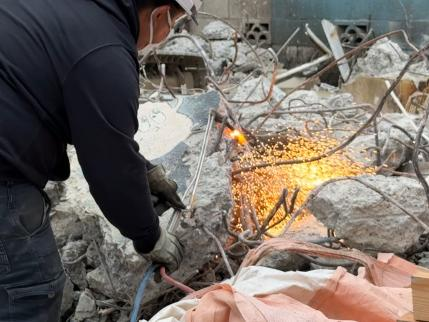
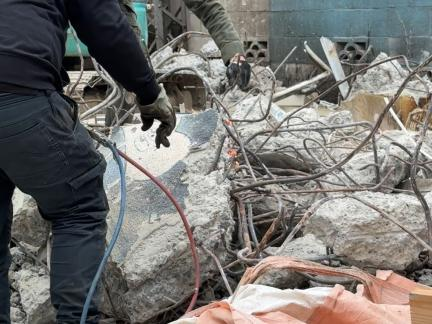
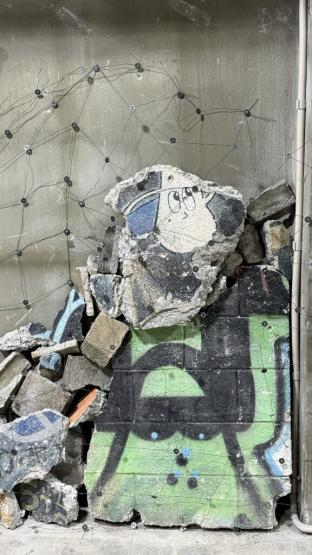
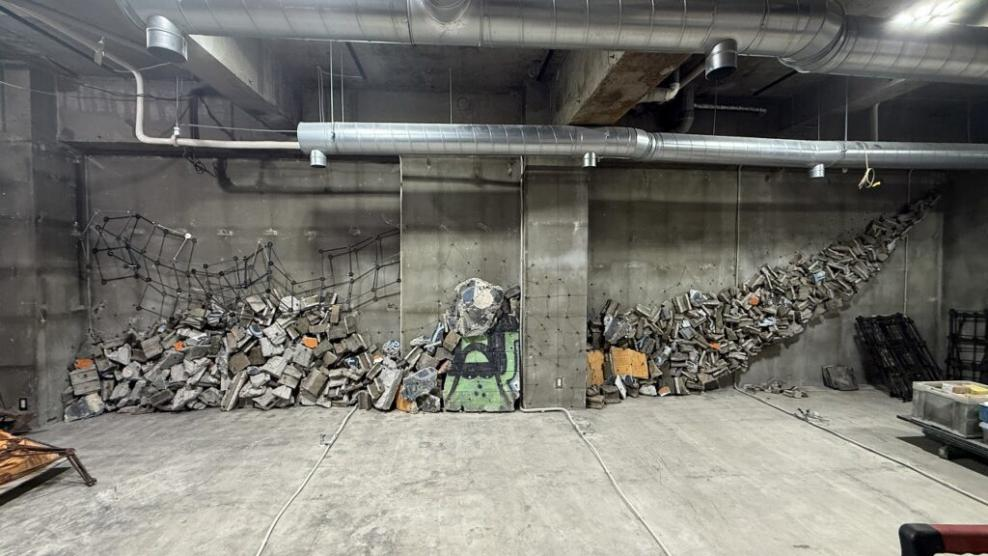
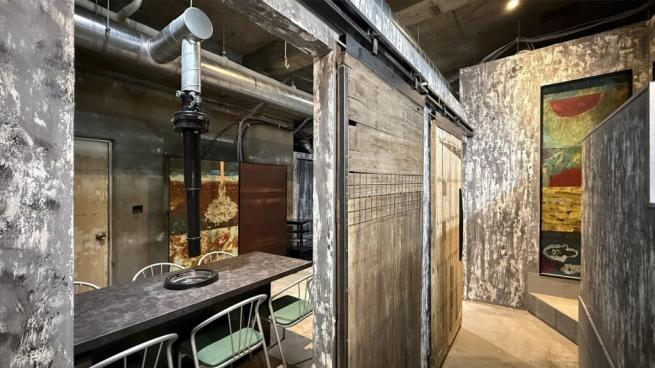
What kind of future will that intense energy generate when it is brought from Shimokitazawa into EITA. in Kodenmacho?
…
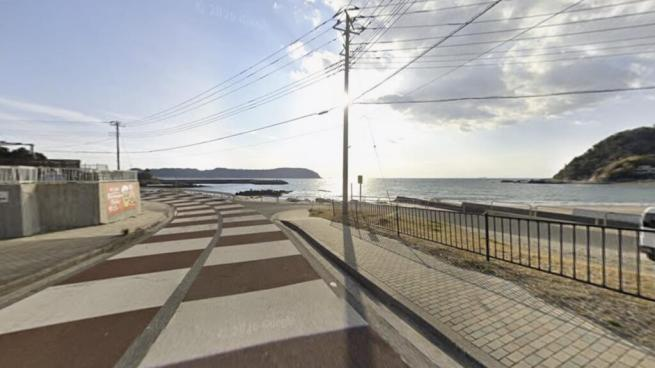
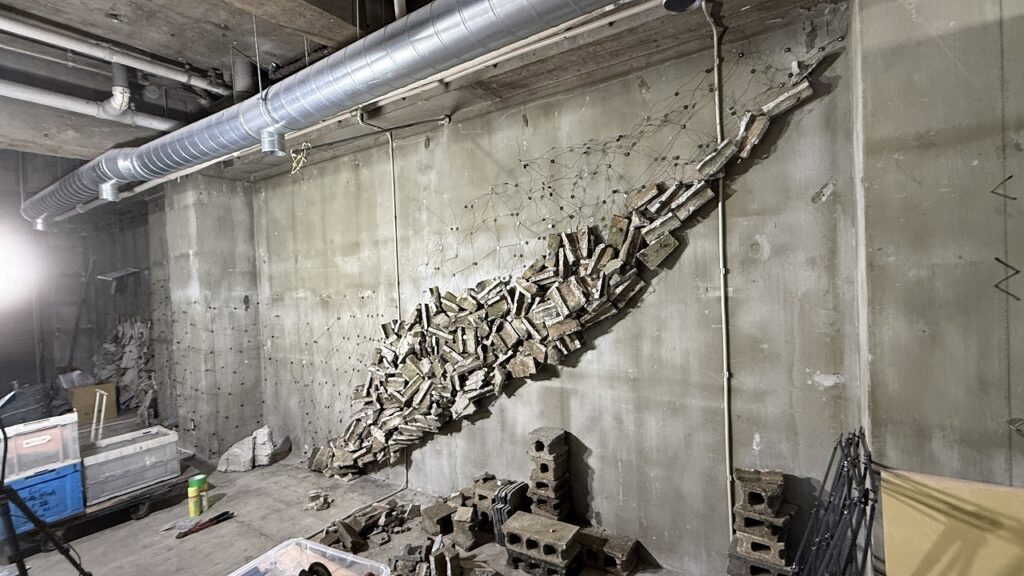
[Minamiboso, Chiba — Concrete Block Wall from a Farm]
…
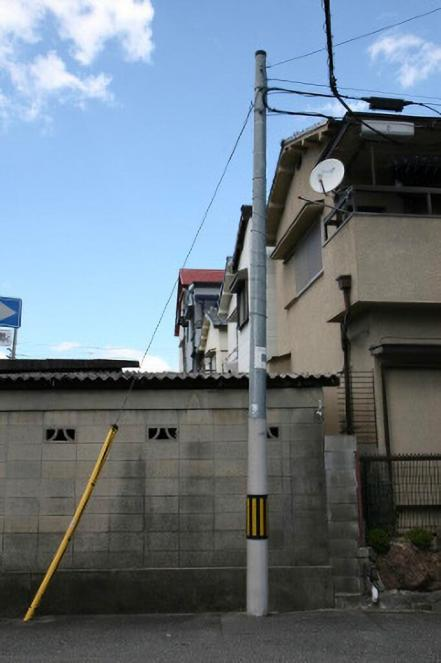
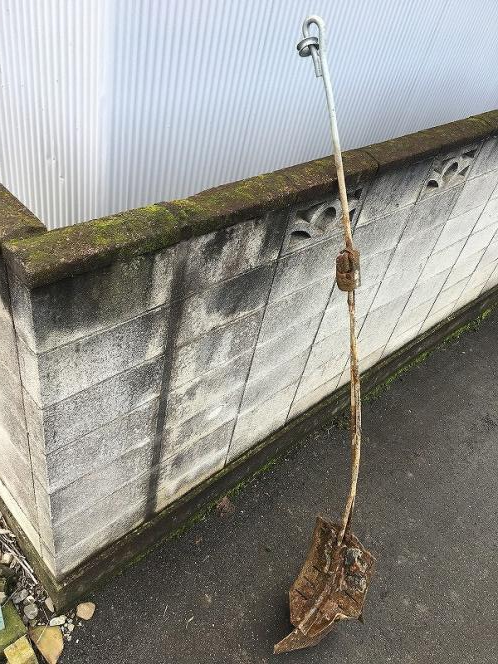
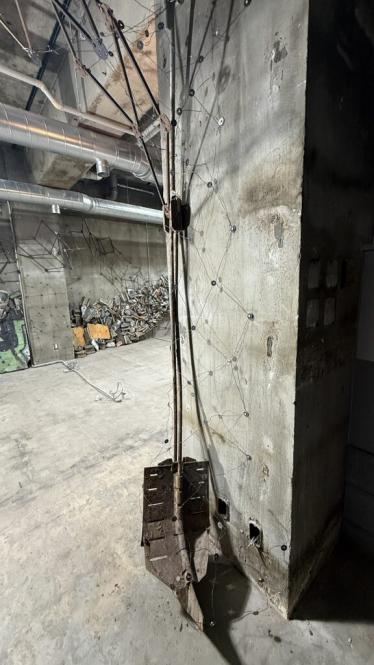
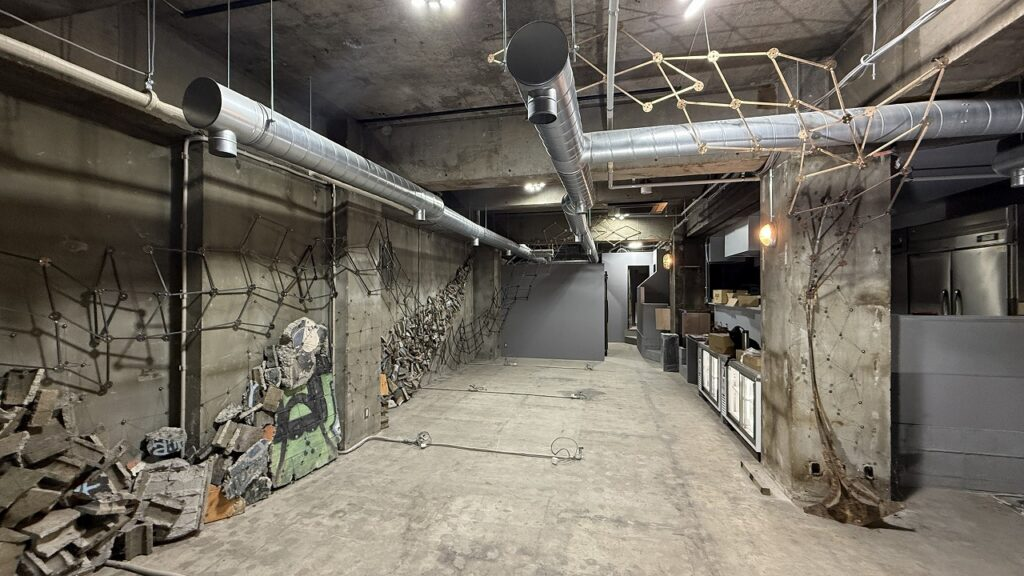
[Kamisato, Saitama — Guy-wire Anchor, Camellia, Persimmon, Wooden Door]
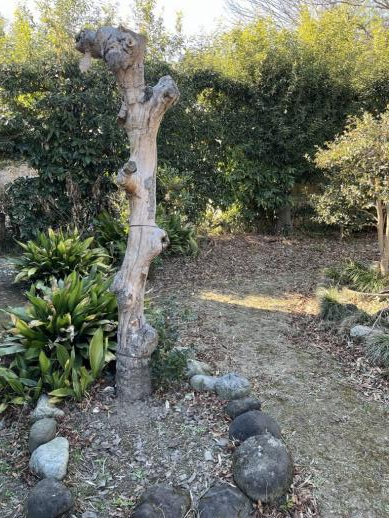
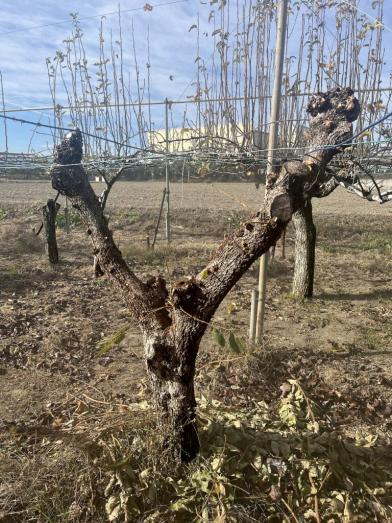
…
[Kitayama, Suzu, Ishikawa — Wooden Door]
…
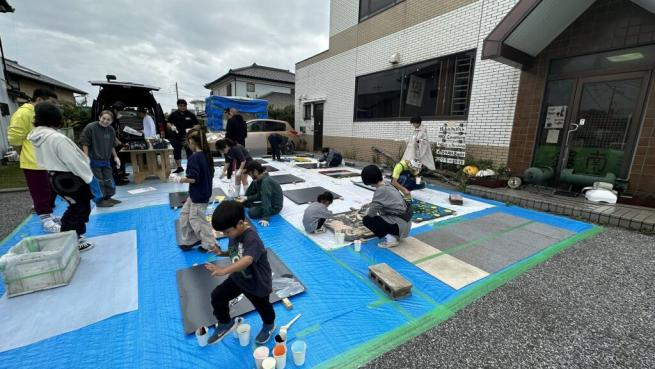
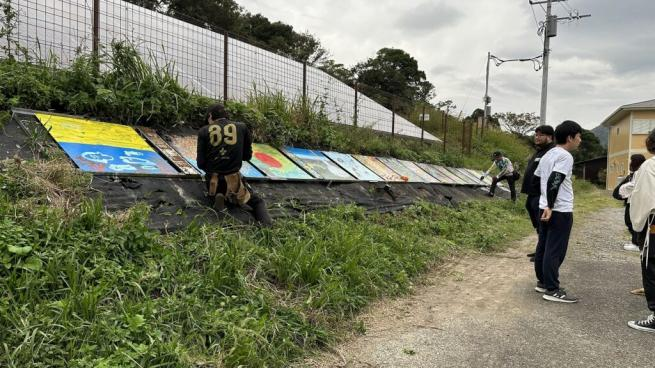
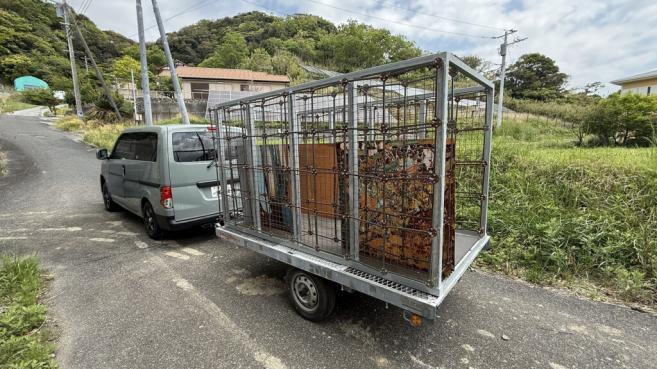
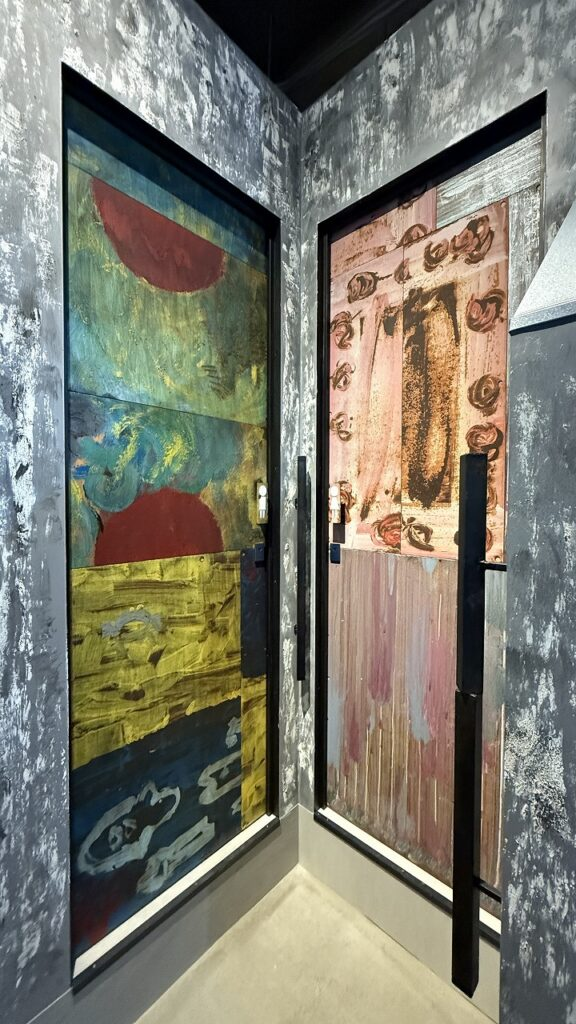
[Hota, Kyonan, Chiba — The Miracle of Paint]
…
…
<From a Company That Makes Spaces to a Company Developing the Technology to Bring Heat Back into the Future>
Until now, we have worked as a company that makes spaces.
We have made shops.
Offices.
Homes.
Furniture.
Signs.
But having thought this far, I have begun to wonder whether what we truly want to make is the space itself.
Perhaps what we really want is for something to happen through the space.
For the sensations of the people inside it to shift slightly.
For something previously invisible to become visible.
For relationships that had seemed fixed to loosen a little.
For something to begin.
In other words:
for the future to open again as something that has not yet been decided.
Perhaps that is why we have been making spaces all along.
If that is so, then what GRIDFRAME works with from now on does not necessarily have to be space.
It might be a broken object.
It might be something someone has been unable to throw away.
It might be a place left behind within a community.
It might be a repair.
It might be a workshop.
It might mean bringing one person into contact with another.
Or it might be a kind of work that does not yet have a name.
Of course, we will continue making spaces.
In fact, I want to make them more than ever.
But rather than placing “making a space” at the beginning as our objective, we will ask what is necessary to generate a future in that place.
If a space is necessary, we will make one.
And if it is not necessary, we will not.
That is the kind of company I want GRIDFRAME to become.
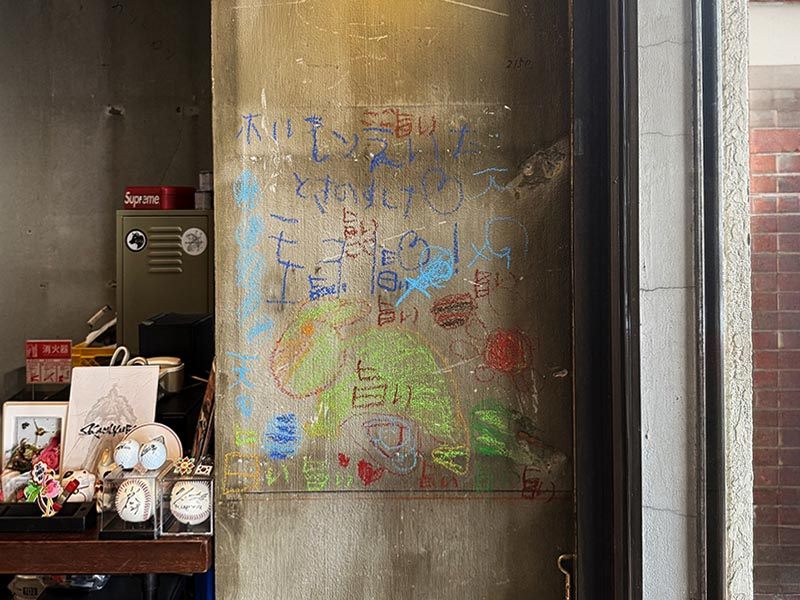
Kodenmacho — HORUMON EITA., a few days after opening: graffiti drawn by a five-year-old boy
This does not mean that we are expanding our field of business.
If anything, it means the opposite.
Instead of deciding in advance what we do, we will confront each place, each person, and each material individually and ask:
What is needed here?
Sometimes the answer may become a space.
Sometimes an object.
Sometimes a system.
More than anything else, I want GRIDFRAME itself to be a company that does not turn its own future into the past.
We will not define some finished image and say:
“This is what GRIDFRAME is.”
We will not determine our present by working backward from that future.
Instead, we will respond to what we encounter and allow ourselves to change as well.
So if someone asks me,
“What kind of company is GRIDFRAME going to become?”
I think my answer will be:
“We haven’t decided yet.”
There is only one thing we have decided.
Wherever the future is beginning to close, we will create a direction in which generation can begin again.
Rather than accurately tracing a future someone else has already decided, we will make room for a future we have never yet seen to emerge from what exists here and now.
Because this is precisely what we have spent all these years searching for through spatial creation.
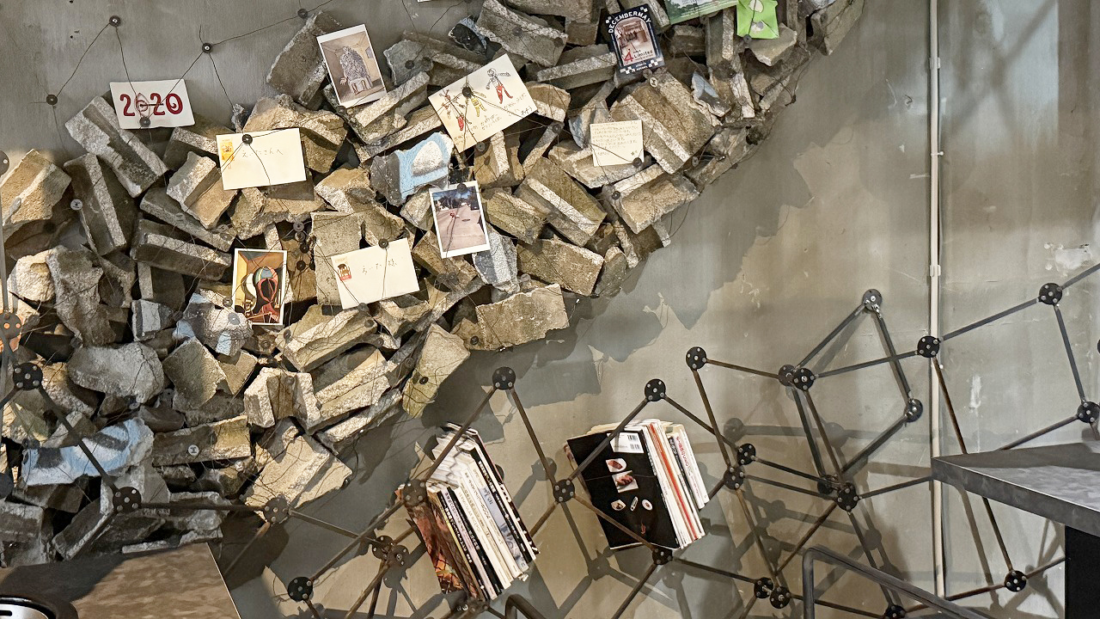
Kodenmacho — HORUMON EITA., two months after opening: GRIDFRAME had become a magazine rack
Touching materials.
Entrusting things to other people.
Accepting chance.
Using broken things.
Allowing time to act.
Handing the continuation of the work over to the people who use it.
None of these, taken individually, is a particularly extraordinary technology.
But perhaps the ability to combine them in order to make things without closing the future will become increasingly necessary.
That is why GRIDFRAME is changing from
“a company that makes spaces”
into
“a company developing the technology to bring heat back into the future.”
We do not create the heat itself.
Nor do we stage excitement.
We create room for something whose outcome is still unknown.
Then people and things begin moving on their own within that space.
And before we know it, heat has emerged.
That is the kind of work we want to do from now on.
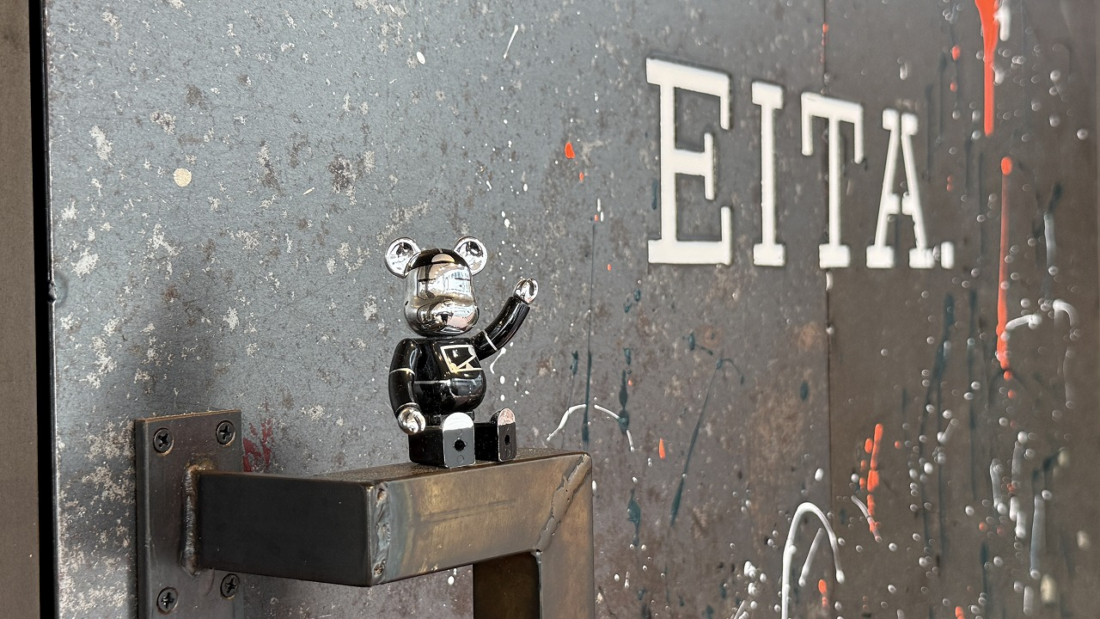
Kodenmacho — HORUMON EITA., three months after opening: one of Mr. Im’s treasured figures welcomes visitors
…
<Toward a Future That Has Not Yet Been Decided>
After writing all of this, I still do not know what our own future will look like.
What kind of company will we become?
Who will we meet?
What kind of work will begin?
I want to begin by not deciding those things now.
If you feel that the future of your life, your shop, your company, or your community has somehow already been decided for you, I would like to hear your story.
We can think about what to make afterward.
It might be a space.
It might be a single object.
It might be a place where we work with our hands together.
Or perhaps it would be better not to make anything at all.
To meet without carrying the answer in advance.
We believe there are futures that can arise only from that kind of encounter.
GRIDFRAME is becoming a company devoted to the technology of bringing heat back into the future.
We have not yet decided what kind of company we will become.
We want to begin this work precisely by not deciding the future in advance.
…
We look forward to sharing more about SOTOCHIKU’s various activities in the next issue.
<SOTOCHIKU Newsletter Archive>
You can view all past issues on our archive page:
https://sotochiku.com/category/tsu-shin-archive/
We would be delighted to hear your feedback or any requests regarding the SOTOCHIKU newsletter.
Thank you for your continued support.
If you wish to unsubscribe, please contact Tanaka via Facebook message or email at tanaka@gridframe.co.jp.
August 31, 2026 GRIDFRAME Toshio Tanaka



Comments are closed